Tindal (YPTN)
Positions
| Name | Callsign | Frequency | Login ID |
|---|---|---|---|
| Tindal ADC | Tindal Tower | 119.700 | TN_TWR |
| Tindal SMC | Tindal Ground | 135.850 | TN_GND |
| Tindal ACD | Tindal Delivery | 128.100 | TN_DEL |
| Tindal ATIS | 124.000 | YPTN_ATIS |
Note
YPTN is a joint military/civil aerodrome and procedures can differ significantly to those at a civil aerodrome. Ensure you are familiar with the military controller skills necessary to provide a quality service.
Airspace
TN ADC is not responsible for any airspace by default.
Restricted Area Activations
There are no restricted areas or MOAs activated by default when TN ADC is online.
Manoeuvring Area
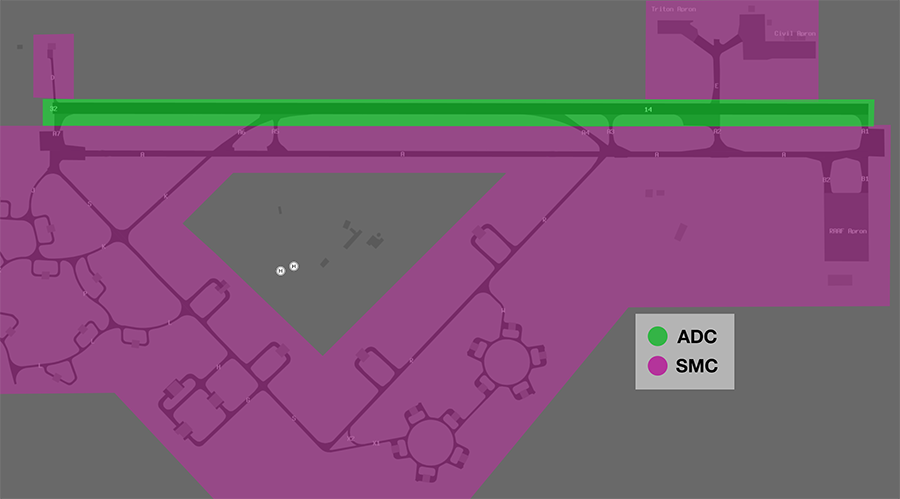
Manoeuvring Area Responsibility
ADC is responsible for all runways. SMC is responsible for all taxiways, but is not responsible for helicopter movements around the infield helipads
Recommended Taxi Routes
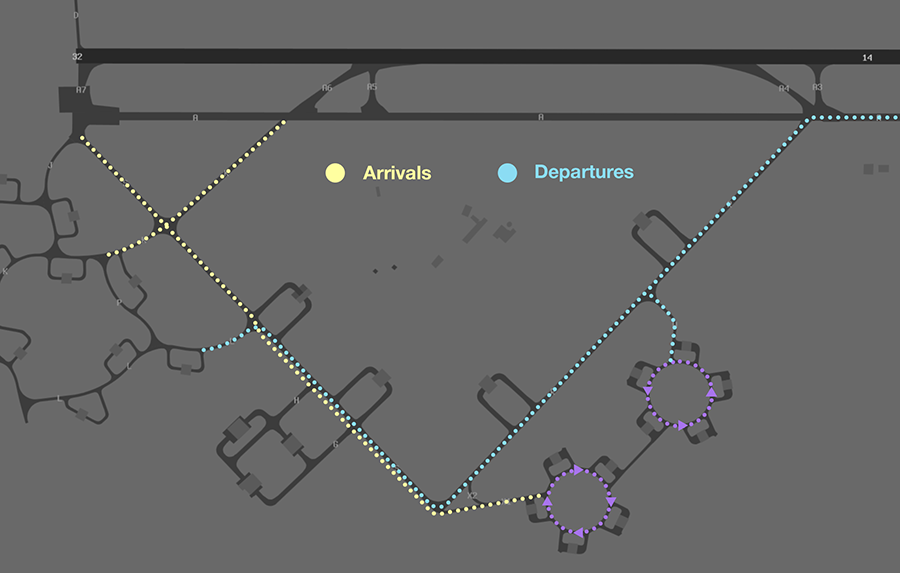
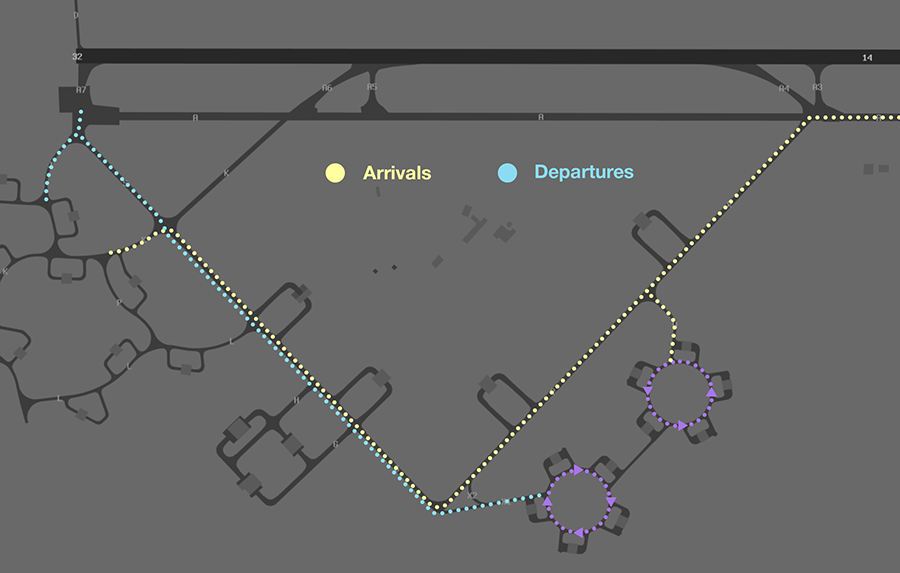
Except when the traffic situation warrants, taxi clearances shall conform to the following diagram:
Local Procedures
Initial and Pitch
The intial points are aligned with Taxiway A at the following locations.
| RWY | Initial Point | Altitude |
|---|---|---|
| 14 | 3NM downwind | A020 |
| 32 | 3NM downwind | A020 |
Coded Clearances
Aircraft departing to certain defined groups of SUA may be cleared a coded clearance.
| Coded Clearance | Restricted Areas |
|---|---|
| B F M | R225D, R238, and R250 |
| A C M | R225B, R225D, R238, and R250 |
| Falconer | R225D, R225F, R232, R238, and R250 |
| Western | R225A-F, and R250 |
| Eastern | R226A and R226B |
Coordination may be required with TN TCU prior to issuing clearance to an aircraft intending to operate in an SUA.
Phraseology
CLAS21 plans to operate within R226A and R226B for military training.
TN ACD: "CLAS21, cleared Eastern via MILNE, climb to F180, squawk 6003, departure frequency 120.95"
Military Gates
There are numerous military gates established throughout the TN TMA to facilitate entry and exit to adjoining SUA.
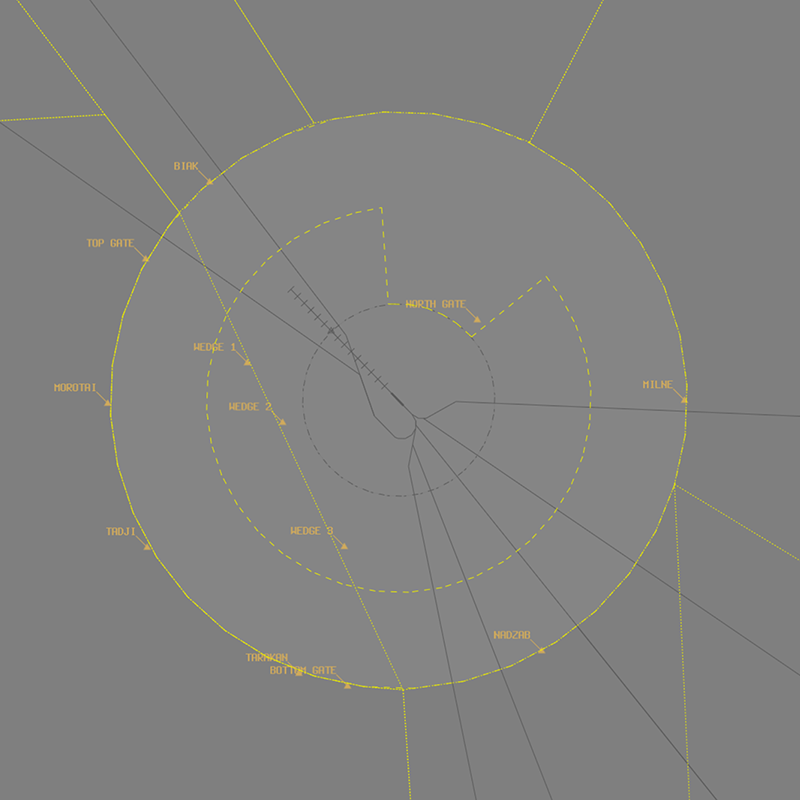
Pilots should include the desired departure gate when requesting clearance.
Phraseology
CLAS35 plans to enter the R225D restricted area via the MOROTAI gate for military training and airwork.
CLAS35: "Tindal Delivery, CLAS35 for MOROTAI, F120 for R225D, request clearance."
TN ACD: "CLAS35, Tindal Delivery. cleared MOROTAI direct, climb to F120, squawk 6001, departure frequency 120.95."
If the pilot does not nominate a gate, or nominates a gate that does not provide access to their intended SUA, TN ACD should clear the aircraft to depart via the appropriate gate.
| Intended SUA | TCU Exit Gate |
|---|---|
| R225 (and adjacent SUA) | MOROTAI TARAKAN |
| R226 | MILNE |
| R238 | WEDGE 1-3 |
Tip
Coordination requirements exist between ACD and TCU when aircraft are requesting clearance to operate in an SUA that has not been activated. Controllers performing the role of ACD should ensure they coordinate with TCU before providing clearance.
Helicopter Operations
Helipads
There are two helipads at YPTN, both located near the control tower in the centre of the airfield.
Both helipads are outside of the manoeuvring area so no takeoff or landing clearances should be issued. Instead, helicopters should be instructed to report airborne or report on the ground.
Phraseology
TN ADC: "CHOP31, Pad 1, report on the ground"
Choppers East
Helicopters perform circuits within 'Choppers East', defined as an area between Taxiway Alpha the Old Stuart Highway, and the runway thresholds.
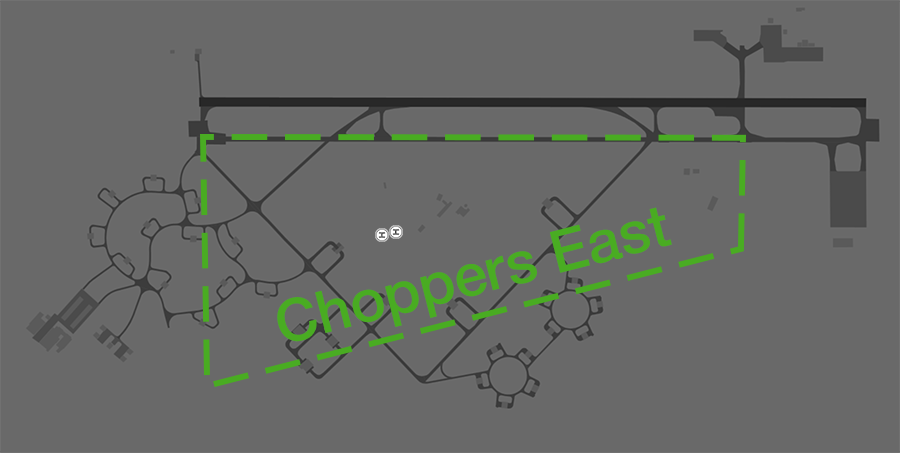
Helicopters requesting clearance to operate in the Eastern Grass shall be cleared to air transit to, and then operate within, the area by ADC.
Phraseology
CHOP12: "Tindal Tower, CHOP12 ZXY, Pad 1, for circuits, ready."
TN ADC: "CHOP12, Tindal Tower. Cleared to operate Choppers East not above A010. Report airborne."
Runway Modes
Circuits
The circuit height is A015.
Circuit Direction
| Runway | Direction |
|---|---|
| 14 | Right |
| 32 | Left |
SID Selection
Civil Aircraft
Aircraft planned via DN VOR, LAREB, GREGA, DOSAM, MILIV, MIGAX, DAPMA shall be assigned the Procedural SID that terminates at the appropriate SID terminus. Jet Aircraft not planned via any of these waypoints shall receive amended routing via the most appropriate SID terminus, unless the pilot indicates they are unable to accept a Procedural SID.
Aircraft unable to accept a procedural SID, and non-RNAV aircraft shall be assigned either the RADAR SID or a visual departure.
Military Aircraft
Military aircraft that are unable to accept a procedural SID shall be assigned either the RADAR SID or a visual departure.
ATIS
Approach Types
During high levels of military traffic, TNA may nominate stereo approaches as the preferred approach type.
| Condition | ATIS APCH field |
|---|---|
| Stereo Approaches | MIL ACFT EXP STEREO APCH |
Coordination
Auto Release
Next coordination is required from TN ADC to TN TCU for all aircraft.
The Standard Assignable level from TN ADC to TN TCU is:
| Aircraft | Level |
|---|---|
| All | The lower of F180 and RFL |
Departures Controller
When a TCU controller is online, aircraft shall be issued with a departure frequency during their airways clearance in accordance with the table below. If no TCU controllers are online, the Advisory frequency shall be issued.
| Runway | Via | Departure Frequency |
|---|---|---|
| All | All | 120.95 (TNA) |
ACD to TN TCU
The controller assuming responsibility of ACD shall give heads-up coordination to TNA (or the enroute controller responsible for the TN TCU) prior to the issue of a clearance to an aircraft intending to operate in an SUA that has not been activated.
Phraseology
TN ACD -> TNA: "CLAS35 requests clearance to R225D”
TNA -> TN ACD: "CLAS35, clearance approved."
Charts
Reference
In addition to the civilian ERSA and AIP publications, the RAAF AIP website contains the necessary charts (available in the TERMA) and description of procedures (in each airports' FIHA).