Tamworth (YSTW)
Positions
| Name | Callsign | Frequency | Login ID |
|---|---|---|---|
| Tamworth ADC | Tamworth Tower | 119.400 | TW_TWR |
| Tamworth ADC South | Tamworth Tower | 118.250 | TW-S_TWR |
| Tamworth SMC | Tamworth Ground | 121.900 | TW_GND |
| Tamworth ATIS | 123.800 | YSTW_ATIS |
Non-Standard Positions
Non-standard positions may only be used in accordance with VATPAC Air Traffic Services Policy.
Approval must be sought from the bolded parent position prior to opening a Non-Standard Position, unless NOTAMs indicate otherwise (eg, for events).
Airspace
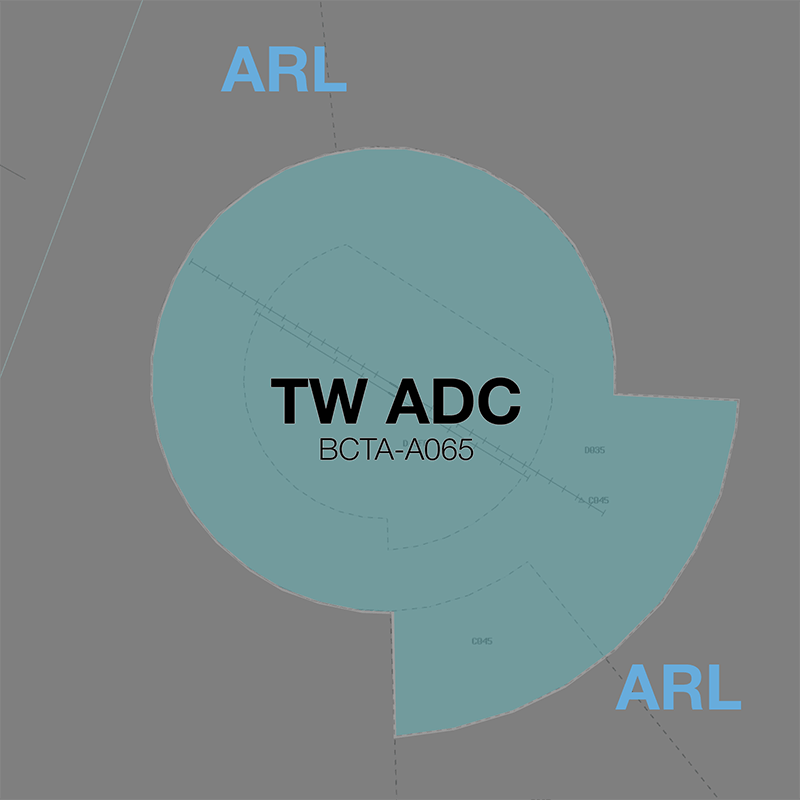
TW ADC is responsible for the Class D airspace in the TW keyhole BCTA to A045, as well as the Class C airspace between A045 and A065 within 23DME TW.
Refer to Class D Tower Separation Standards for more information.
Dual ADC Operations
When ADC South is Online, they are responsible for the airspace between the TW 160 Radial, West through to the 295 Radial.
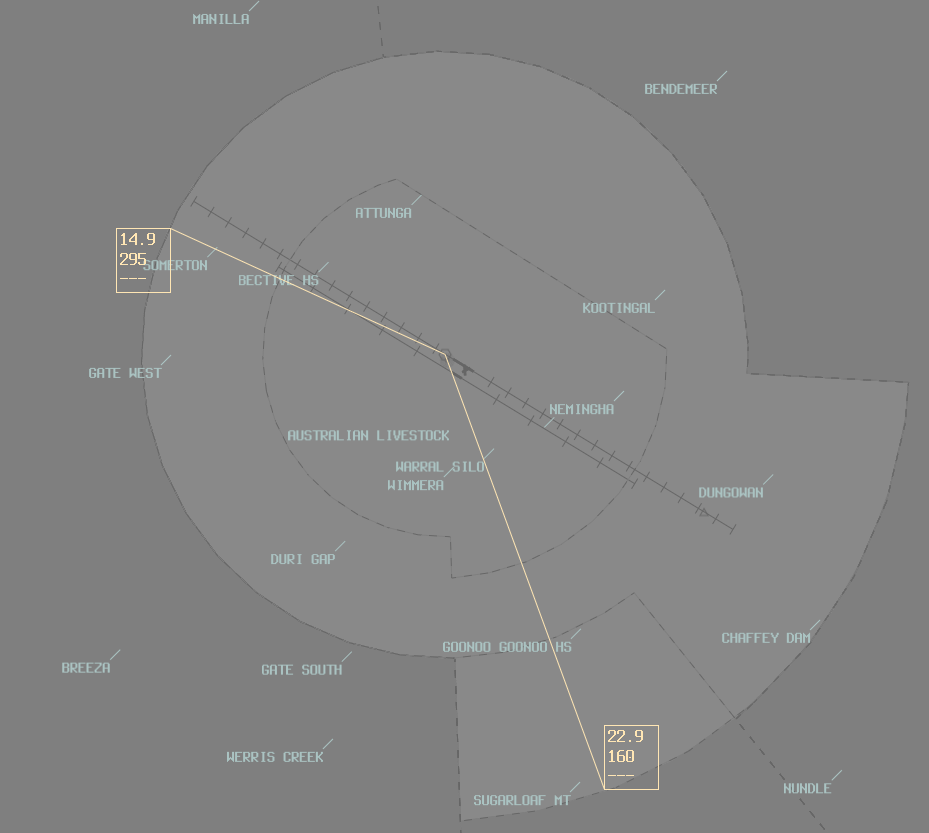
ADC North takes responsibility for the North Runway, Circuit and Airspace (Runway 12L/30R).
ADC South takes responsibility for the South Runway, Circuit and Airspace (Runway 12R/30L).
Refer to the ATIS section for information on ATIS formatting when ADC South is online.
Important
ADC South is not permitted online when Single Runway Operations are in use.
Manoeuvring Area
Taxiway Restrictions
Taxiway B west of C is limited to 8000KG AUW and 23M MAX wingspan. Common airliners including Dash 8 Q400s will need to enter/exit runway 12L/30R via intersection C.
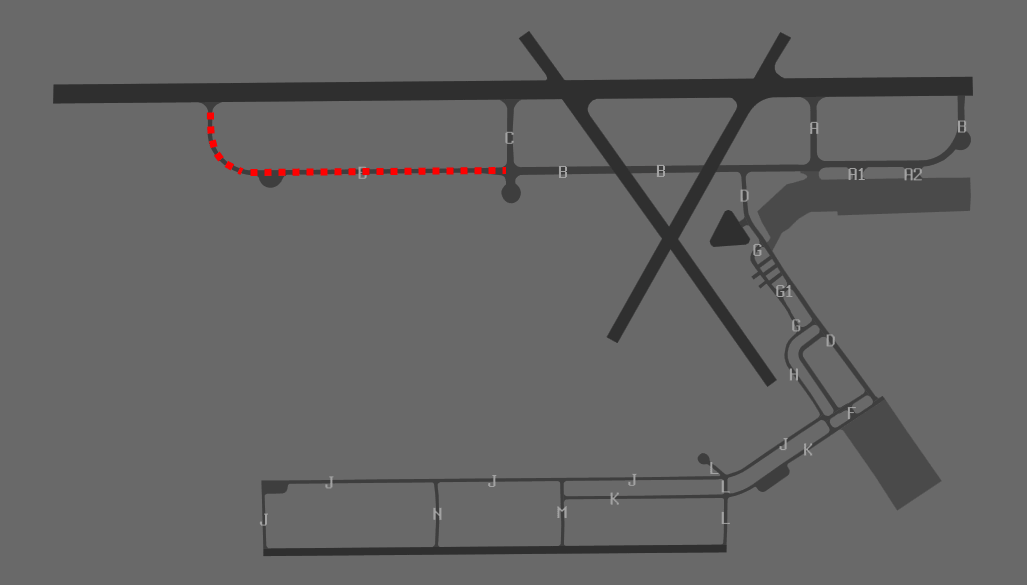
The taxiways leading to and surrounding the southern runway are limited to 5700KG AUW.
Recommended Taxi Routes
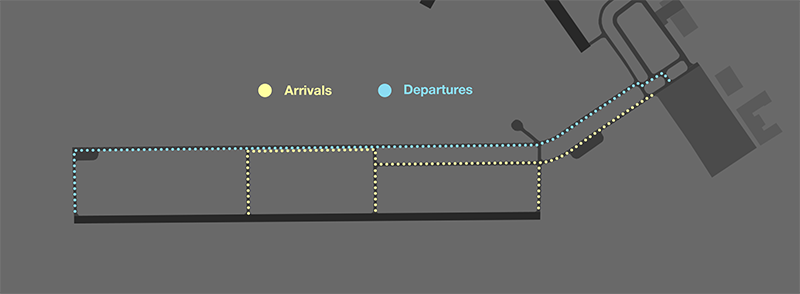
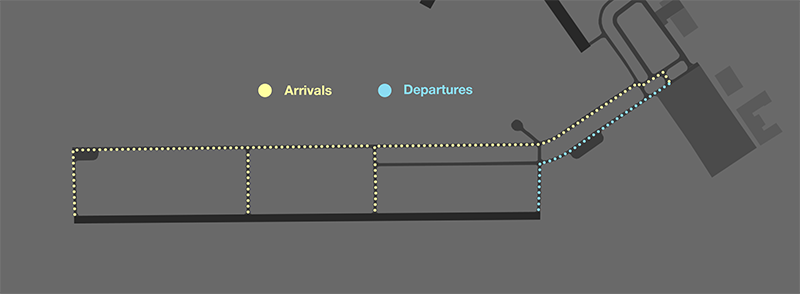
To avoid nose-to-nose conflict at the southern runway, the following recommended taxi routes shall be utilised.
VFR Operations
Departures
Due to high terrain to the north, departures to the north and east generally require a CTA departure. These aircraft must be issued with an explicit airways clearance to enter the overlying class D or C airspace.
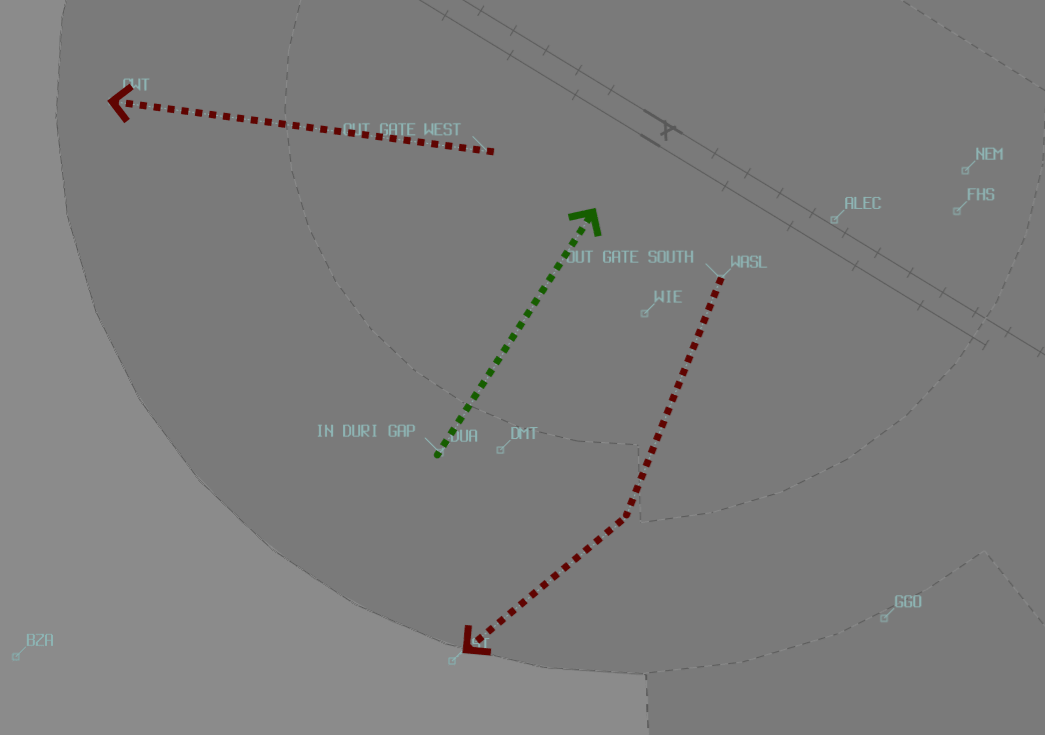
VFR aircraft departing between the 160 radial through to the 295 radial (south and west), who haven't planned a CTA departure, will report either for a GST or GWT departure from the southern runway (12R/30L). These aircraft shall be instructed to depart via their respective gates with their takeoff clearance.
Phraseology
83C: "Tamworth Tower, Cherokee 83C, holding point J, for a GST departure, ready"
TW ADC: "83C, Tamworth Tower, GST departure, cleared for takeoff"
83C: "GST departure, cleared for takeoff, 83C"
The GST and GWT departures guide aircraft clear of the DUA Arrival to exit the CTR directly into Class G.
Note
YSTW ERSA FAC details the lateral and vertical requirements of aircraft tracking via the GST and GWT departures.
Arrivals
DUA Arrivals
VFR arrivals between the 160 radial through to the 295 radial should route via DUA and report prior to reaching DUA. Aircraft should be issued with an airways clearance and instructed to report at 5NM for circuit entry instructions.
Phraseology
XCW: "Tamworth Tower, Cherokee XCW, 5 miles west of DUA, A030, received A, inbound"
TW ADC: "XCW, Tamworth Tower, cleared DUA, TW, maintain A030, report at 5 miles"
XCW: "Cleared DUA, TW, maintain A030, XCW"
Other Directions
VFR arrivals from other directions shall request clearance from an inbound reporting point or report their position.
Phraseology
XGN "Tamworth Tower, Cherokee XGN, NUN at A045, 2 POB, in receipt of A, inbound"
TW ADC: "XGN, Tamworth Tower, cleared NUN, TW, maintain A045, report ready for descent"
XGN: "Cleared NUN to TW, maintain A045, wilco, XGN"
Runway Modes
Preferred Runway Modes
Winds must always be considered for runway modes, however the order of preference is as follows:
| Priority - Mode | Arrivals | Departures | Circuits |
|---|---|---|---|
| =1 - 12 PROPS | 12R (via DUA, and single engine VFR from 160° radial clockwise to 295° radial). 12L (all other arrs) | 12R (via GST or GWT), 12L (all other deps) | 12R |
| =1 - 30 PROPS | 30L (via DUA, and single engine VFR from 160° radial clockwise to 295° radial). 30R (all other arrs) | 30L (via GST or GWT), 30R (all other deps) | 30L |
Note
Runways 18/36 and 06/24 are rarely used. They are both unsealed and should generally only be used at pilot request.
Special Runway Operations
PROPS
During day VMC only, simultaneous parallel runway operations may be used between runways 12L/R or 30L/R. The ATIS must be updated to reflect this mode.
Controllers must closely monitor the base and final legs of the circuit to ensure pilots do not pass through their assigned runway centreline.
Circuits
| Runway | Direction (by Day) | Direction (by Night) |
|---|---|---|
| 12L | Left | Right |
| 12R | Right | - |
| 30L | Left | - |
| 30R | Right | Left |
Circuits are to be conducted at not above A025.
Separation
Local Lateral Separation Points
The positions in each table header below are procedurally separated from each other, provided the conditions in each table row are met. At least one condition must be met in each column.
| South and East of New England Highway - Manilla Rd |
vs | 040 Radial |
|---|---|---|
| LLC South of Moonbi township LLC East of Tamworth City |
LLC South of 11 DME |
| South and East of New England Highway - Manilla Rd |
vs | 030 Radial |
|---|---|---|
| LLC East of Tamworth City |
| East of New England Highway | vs | 168 Radial |
|---|---|---|
| LLC North of GGO | LLC North of 14 DME |
| East of New England Highway | vs | 180 Radial |
|---|---|---|
| LLC North of WBH | LLC North of 25 DME |
| East of New England Highway | vs | 190 Radial |
|---|---|---|
| Always laterally separated |
| Visual fixes | vs | ILS 30R |
|---|---|---|
| LLC South of Duri Township, Round Hill, GGO, and NUN |
||
| LLC North of DGN - NEM - Tamworth City - MAL via Manilla Rd |
| Visual fixes | vs | VOR 12L |
|---|---|---|
| LLC West of GWT | ||
| LLC North of DGN - NEM - Tamworth City - MAL via Manilla Rd |
The geographic feature separation standard may also be useful to efficiently process aircraft.
The Oxley and New England Highways are good references for this standard.
Surveillance
Surveillance coverage can be expected to be not available below A034 in the TW CTR. Although TW ADC is not permitted to use surveillance for separation, ARL may assist by establishing surveillance separation standards via coordination.
ATIS
Runway Mode Formatting
The ATIS must indicate runway configuration in the format below:
| Mode | ATIS Runway information |
|---|---|
| 12 PROPS | RWY 12L AND R FOR ARRS AND DEPS |
| 30 PROPS | RWY 30L AND R FOR ARRS AND DEPS |
Operational Info
When parallel runway operations are in use, the ATIS OPR INFO field shall include:
SIMUL PARL RWY OPS IN USE. EXP TFC ON FINAL AND OPP BASE OF THE PARL RWY
Coordination
Departures
Next coordination is required from TW ADC to ARL for all aircraft entering ARL CTA.
The Standard Assignable level from TW ADC to ARL is:
| Aircraft | Level |
|---|---|
| All | The lower of A070 and RFL |
Arrivals/Overfliers
ARL will heads-up coordinate all arrivals/overfliers that are entering the TW CTR/CTA to TW ADC
Phraseology
ARL -> TW ADC: "Via MOR DCT for the VOR-A, FD272”
TW ADC -> ARL: "FD272, VOR-A"
The Standard Assignable level from ARL to TW ADC is A080, any other level must be prior coordinated.
ADC South Online
When ADC South is online, ARL may not be familiar with which controller owns what airspace. Best practice is to receive the coordination no matter what, and if it was meant for the other ADC controller, relay the coordination to them internally.
TW ADC Internal
TW ADC must heads-up coordinate all aircraft transiting from one ADC controller to the other.
Phraseology
TW ADC S -> TW ADC: "via GWT, SPP for an overfly"
TW ADC -> TW ADC S: "SPP, A035"