Armidale (ARL)
Positions
| Name | ID | Callsign | Frequency | Login ID |
|---|---|---|---|---|
| Armidale | ARL | Brisbane Centre | 130.900 | BN-ARL_CTR |
| Cessnock | CNK | Brisbane Centre | 123.400 | BN-CNK_CTR |
| Denman | DEN | Brisbane Centre | 134.150 | BN-DEN_CTR |
| Lightning | LIG | Brisbane Centre | 133.000 | BN-LIG_CTR |
| Gunnedah | GAH | Brisbane Centre | 121.150 | BN-GAH_CTR |
| Moree | MOR | Brisbane Centre | 134.850 | BN-MOR_CTR |
| Rylstone | RYS | Brisbane Centre | 119.700 | BN-RYS_CTR |
Non-Standard Positions
Non-standard positions may only be used in accordance with VATPAC Air Traffic Services Policy.
Approval must be sought from the bolded parent position prior to opening a Non-Standard Position, unless NOTAMs indicate otherwise (eg, for events).
Airspace
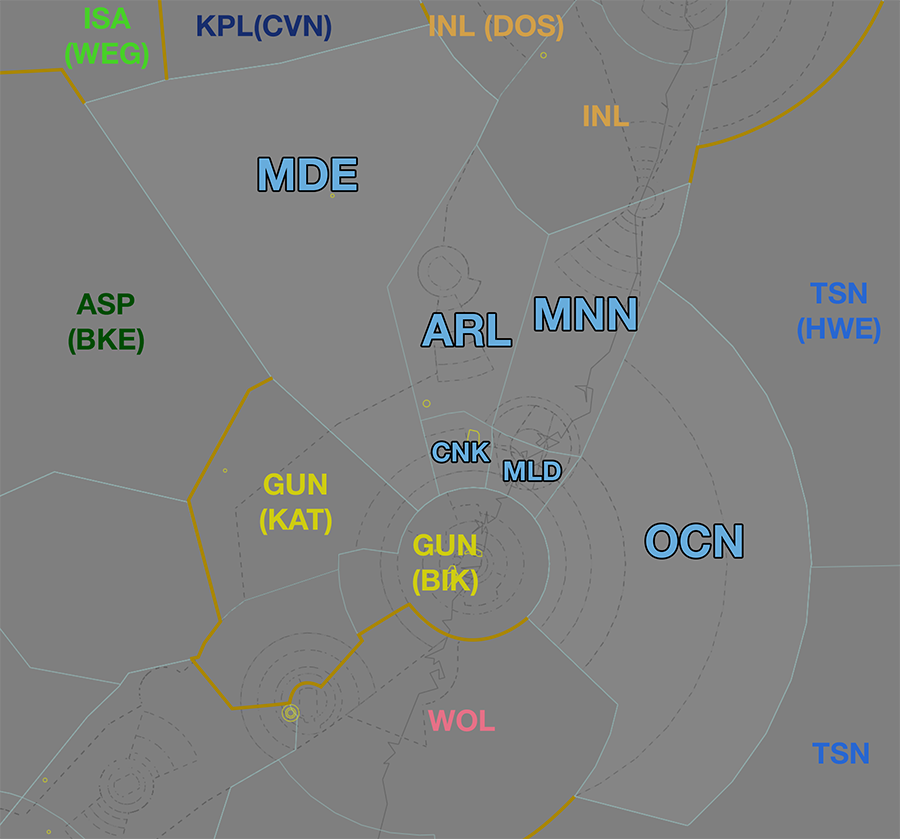
Reclassifications
When TW ADC is offline, TW CTR (Class D and C SFC to A085) reverts to Class G, and is administered by GAH. Alternatively, GAH may provide a top-down procedural service if they wish (not recommended).
Tip
If choosing not to provide a top down service, consider publishing a pre-formatted ATIS Zulu for the aerodrome, to inform pilots about the airspace reclassification.
Departure and Arrival Procedures
YSSY
STAR Assignment
The following subsectors are responsible for issuing STAR clearance.
| Subsector | STAR | Type | Notes |
|---|---|---|---|
| ARL | BOREE MEPIL |
Jet Non-Jet |
Descent not below F250Descent not below F250 |
Note
MNN is encouraged to perform early handoffs to ARL for aircraft inbound to YSSY who depart within MNN jurisdiction. This is to allow ARL to provide STAR clearance and sequencing instructions in a timely manner.
Arrivals from the north shall be given initial descent to not below F250 (when CNK is online). CNK will issue final descent.
Tip
During periods of high traffic flow from the north, it may be beneficial to issue an aircraft with the adjacent STAR (e.g. a jet assigned the MEPIL STAR). This is most common when assigning the alternate runway to an arrival.
Either SY TCU or ARL may propose utilising the adjacent STAR where two aircraft with significantly different cruise/descent speeds will be required to overtake or pass abeam each other to achieve a sequenced landing time, or if assigned different runways. This technique can allow aircraft to be processed for different runways independently with minimal delay by using the built-in separation afforded by the STAR height requirements.
Phraseology
ARL: "RXA6417, amended tracking and STAR clearance available"
RXA6417: "RXA6417, go ahead"
ARL: "RXA6417, recleared direct BOREE for the BOREE5A arrival, runway 34L, maintain F180"
RXA6417: "Recleared direct BOREE for the BOREE5A arrival, runway 34L, maintain F180, RXA6417"
Sequencing
Sequencing arrivals from the north into YSSY is a joint responsibility of the subsectors of ARL. Initial sequencing actions for aircraft from the north should be performed by ARL, with fine tuning and any holding required issued by CNK.
Aircraft from the north shall be assigned runway 16L/34R during PROPS. However, some situations may warrant the use of the main runway (16R/34L), such as heavy aircraft operationally requiring the longer runway or large volumes of traffic requiring the use of both runways to minimise delay. In this case, coordination must be conducted with Melbourne Centre or Sydney Flow (if operating) to ensure that the sequence is built in an efficient and orderly way.
Phraseology
ARL -> BIK: "North of Sydney, CPA21, with your concurrence will be assigned runway 34L due operational requirement"
BIK -> ARL: "Concur, CPA21 runway 34L, required landing time 43 due sequence from the west"
ARL -> BIK: "Runway 34L, landing time 43, CPA21"
Adjacent Feeder Fixes
Aircraft assigned the same runway inbound via BOREE and MEPIL, must be considered to be on the same STAR for sequencing purposes. That is, they must be at least 2 minutes apart at their respective Feeder fixes.
Holding Fixes
Refer to the vatSys Enroute Holds map for details of published holds on the airways inbound to YSSY. Where delays necessitate holding, aircraft should be instructed to hold at the following positions. The listed time should be subtracted from an aircraft's assigned feeder fix time to determine when they should leave the hold.
| Feeder Fix | Holding Fix | Time from Hold to Feeder Fix |
|---|---|---|
| BOREE | SADLO | 4 min |
| YAKKA | MONDO | 3 min |
Tip
Additional holding may be performed at upstream holding fixes to reduce controller workload. This is particularly useful when non-standard child sectors have been opened, allowing aircraft to absorb some of their delay in the previous sector.
YSWS
STAR Assignment
The following subsectors are responsible for issuing STAR clearance.
| Subsector | STAR | Type | Notes |
|---|---|---|---|
| DEN | GODUK | Non Jet | |
| GAH | UNTAV | All | Descent not below F250 |
| RYS | GODUK | Non Jet |
Arrivals from the north shall be given initial descent to not below F250. DEN will issue final descent.
Assignment Rules
YSWS uses different STAR designators to differentiate between different variations of STARs that will be issued, according to time of day, weather, and runway modes in use. Arrivals shall be assigned the STAR in accordance with the tables below.
| STAR Designator | Condition | |
|---|---|---|
| A/B | Day | Between 0530-2300 Local |
| N | Night | Between 2300-0530 Local, when RRO is not in use |
| Q | RRO | Between 2300-0530 Local, when RRO is in use |
Tip
vatSys will assign the A STAR by default. Controllers must manually select the N/Q STAR as appropriate.
The GUDOK N STAR may be tactically assigned by SWA, for track shortening or separation.
Sequencing
Sequencing arrivals from the north into YSWS is a joint responsibility of the subsectors of ARL. Initial sequencing actions for aircraft from the north should be performed by GAH, with fine tuning and any holding required issued by DEN.
YSRI
STAR Assignment
The first subsector to control an aircraft bound for YSRI is responsible for issuing STAR clearance for aircraft via RITSU.
Sequencing
Sequencing arrivals into YSRI is a joint responsibility of all the subsectors of ARL.
YSTW
ARL and GAH are responsible for issuing descent.
Sequencing
ARL and GAH share a joint responsibility to build the final sequence of arrivals into YSTW when the tower is open. Coordination should be conducted to ensure that aircraft from each sector are sequenced appropriately with each other.
YWLM
STAR Assignment
The following subsectors are responsible for issuing STAR clearance.
| Subsector | STAR | Type | Notes |
|---|---|---|---|
| ARL | LAXUM | All |
Coded Clearances
The ARL subsector is additionally responsible for issuing the STORM 2 coded clearance to aircraft arriving YWLM via the Thunder Corridor.
Local Procedures
Special Use Airspace
There are multiple volumes of SUA within ARL airspace, mostly associated with military operations in and out of YWLM.
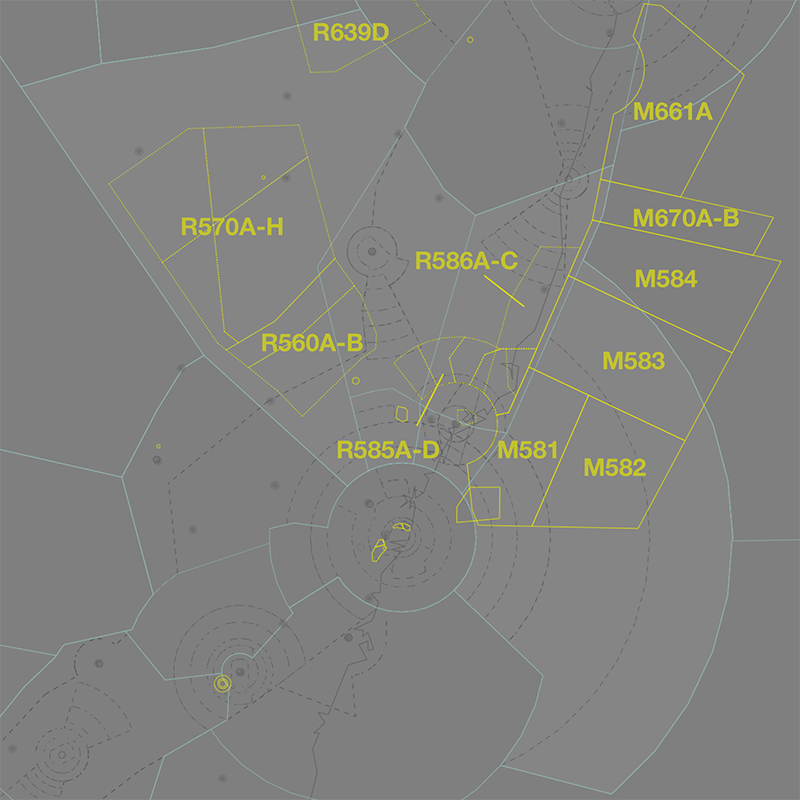
WLM TCU (or MNN on their behalf) will coordinate the activation these SUA prior to any activity.
R560 & R570 Williamtown
The R560A-B and R570A-H restricted areas are located west of YWLM and YSTW within the ARL and GAH subsectors. The restricted areas are connected to the WLM TCU by the Thunder Corridor.
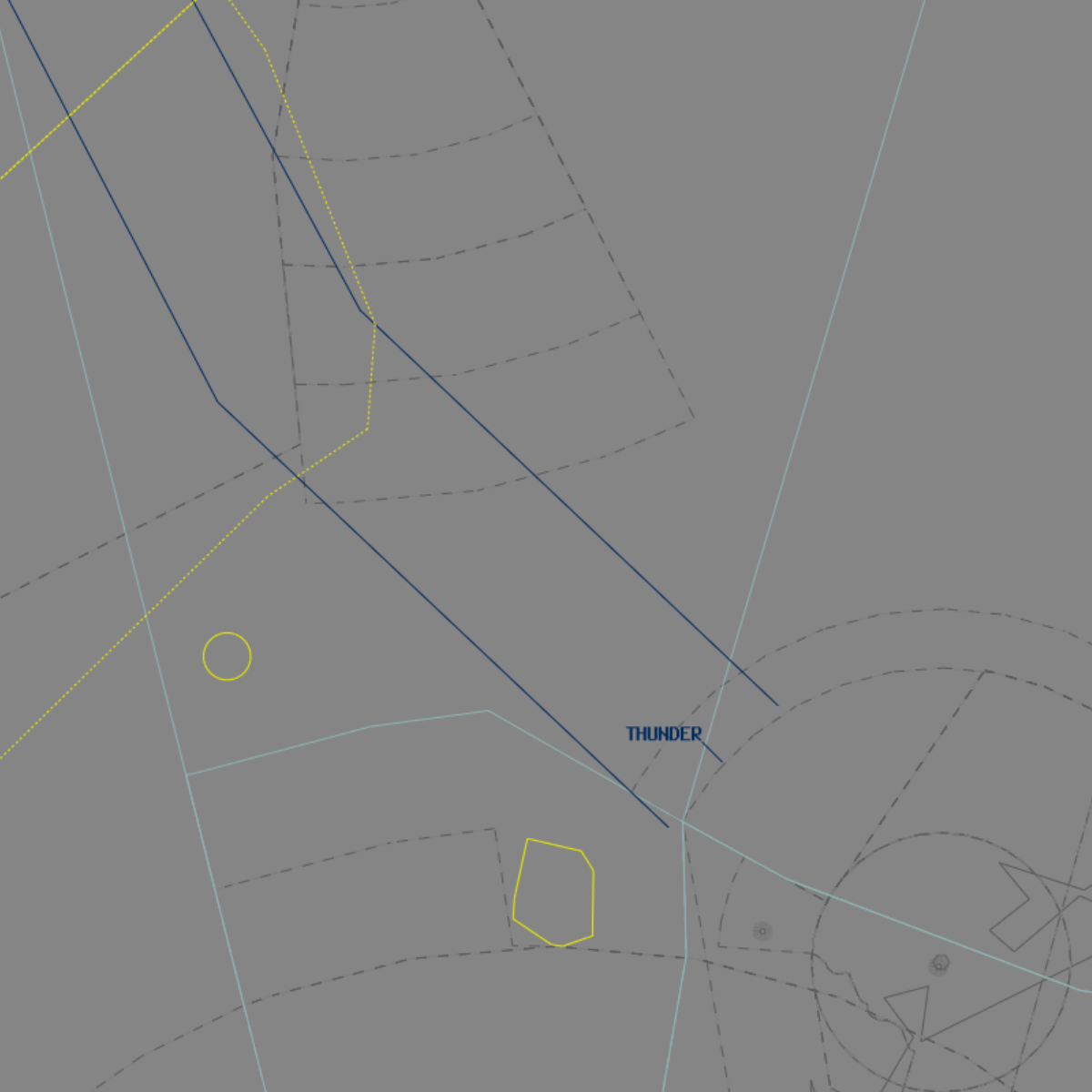
Aircraft departing the WLM TCU will be cleared the STORM 1 coded clearance. Aircraft returning to the TCU will be cleared the STORM 2 coded clearance by ARL.
Phraseology
BARN21 has completed their military training operations in R570, and intends to return to base.
BARN21: "Brisbane Centre, BARN21"
ARL: "BARN21, Brisbane Centre, identified"
BARN21: "Brisbane Centre, BARN21, detail complete, for RTB, F130"
ARL: "BARN21, cleared Storm 2. At THNDA, contact Willy Approach, 135.7"
BARN21: "Cleared Storm 2, at THNDA contact Willy Approach, BARN21"
Note
Aircraft tracking via the STORM coded clearances does not constitute a voiceless coordination route between WLM TCU and ARL. Aircraft should still be heads-up coordinated prior to 5 minutes to the boundary, unless coordinated otherwise.
Aircraft transiting the Thunder Corridor should be assigned the appropriate altitude to ensure separation with opposite direction traffic while transiting to their desired restricted area.
| Coded Clearance | Altitude |
|---|---|
| STORM 1 | F140 |
| STORM 2 | F130 |
Affected Civil Operations
When activated these restricted areas disrupt traffic on the Q16, Q235, Q293, and Y46 high altitude airways, used by aircraft travelling between YPAD-YBBN, and YSSY-North Queensland/East Asia.
| Planned Airway | ERSA Recommended Rerouting |
|---|---|
| Q16 | via Q4 |
| Q235 | ... STUIE H530 KABIX ... |
| Q293 | ... STUIE H530 KABIX ... |
| Y46 | via Y27 |
Aircraft travelling below F240 on the H66, H76, and Q35 airways are also disrupted, most directly affecting aircraft departing YSBK to the northwest, and aircraft climbing out of YSSY via STUIE. These aircraft may be given altitude requirements to assure separation with the restricted areas, where appropriate.
Note
Aircraft tracking via a recommended rerouting must still be separated from the SUA laterally and vertically. After amending flight plans for the purposes of rerouting around SUA, controllers should ensure the route is displayed visually and the BRL is used to measure for >2.5nm clearance with all parts of the SUA.
STAR Clearance Expectation
Handoff
Aircraft being transferred to the following sectors shall be told to Expect STAR Clearance on handoff:
| Transferring Sector | Receiving Sector | ADES | Notes |
|---|---|---|---|
| CNK | GUN(BIK) | YSCB | Jets only |
| DEN | GUN(BIK) | YSCB | Jets only |
| LIG | RYS | YSSY, YSWS | |
| RYS | GUN(KAT) | YSCB |
Terminal Handover Frequencies
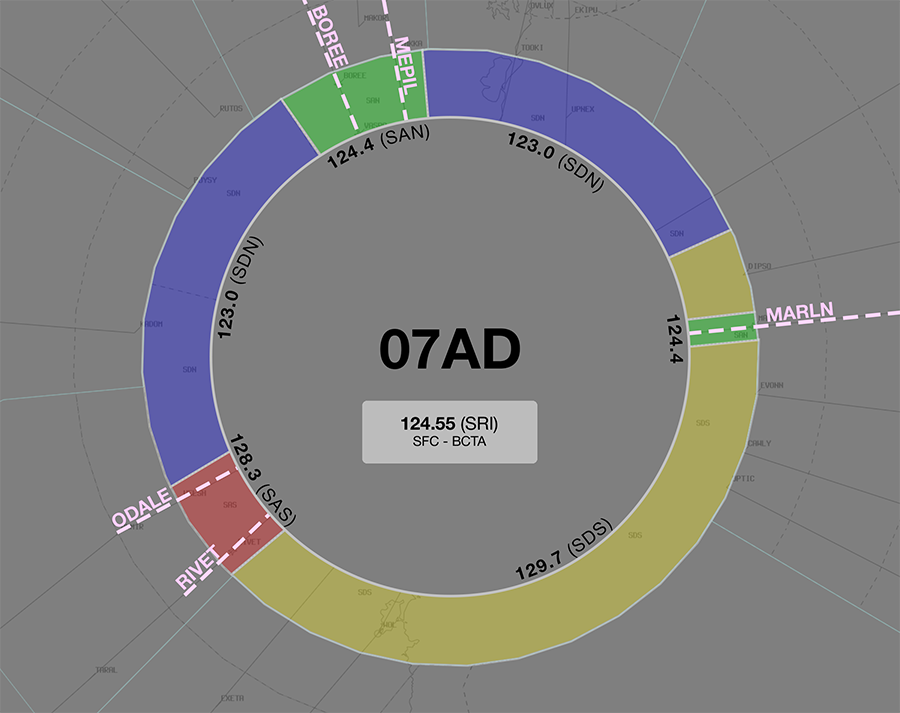
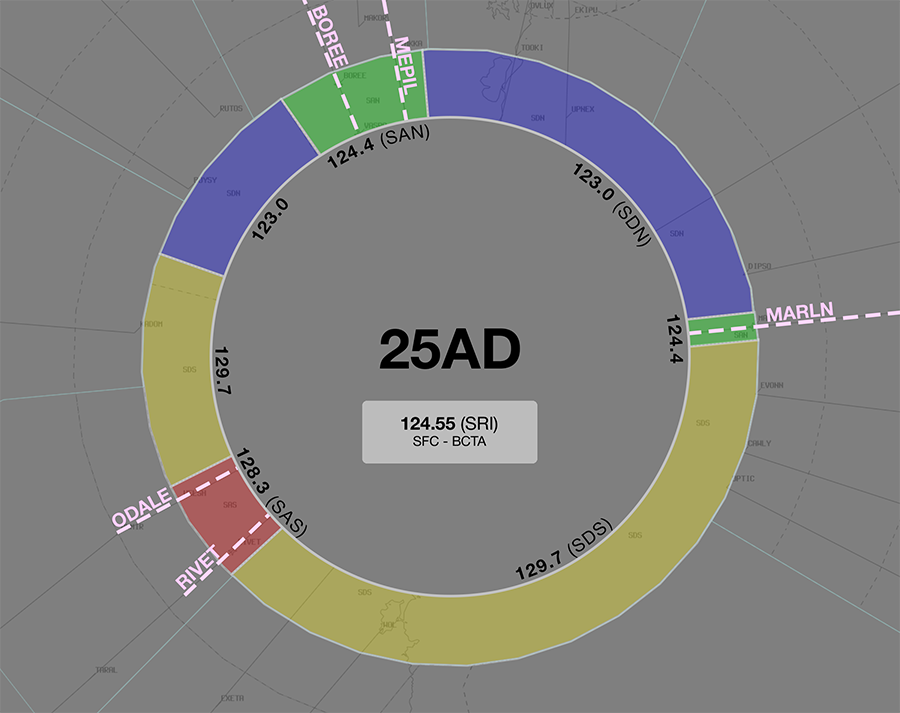
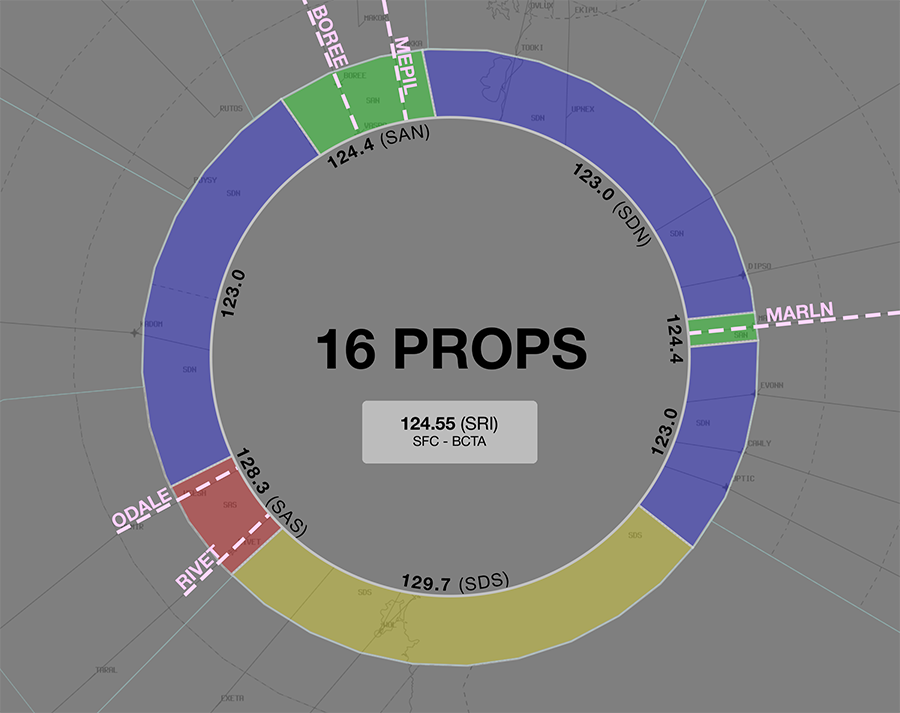
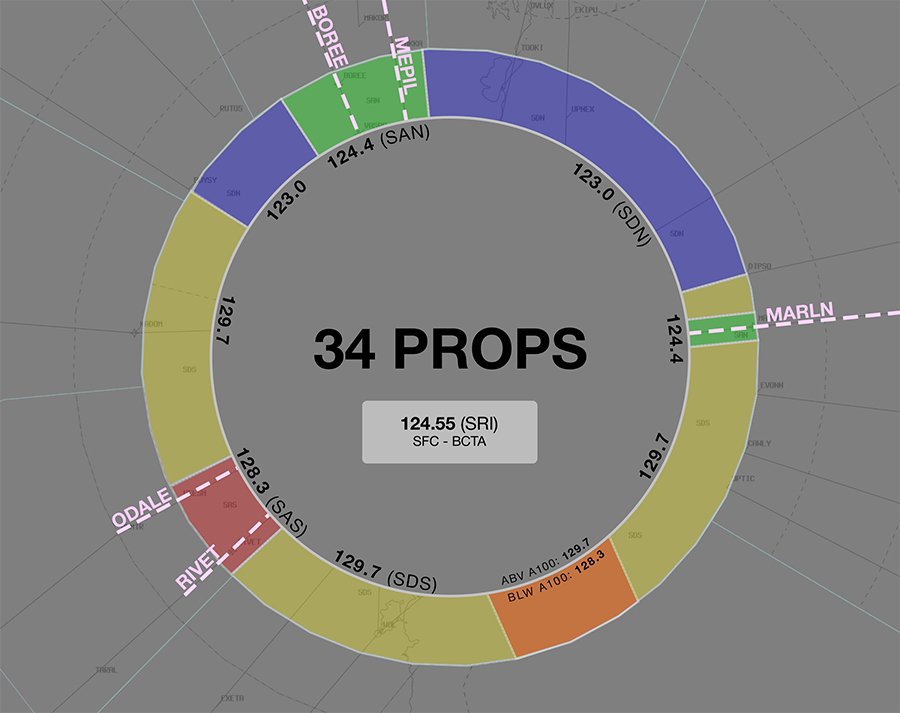
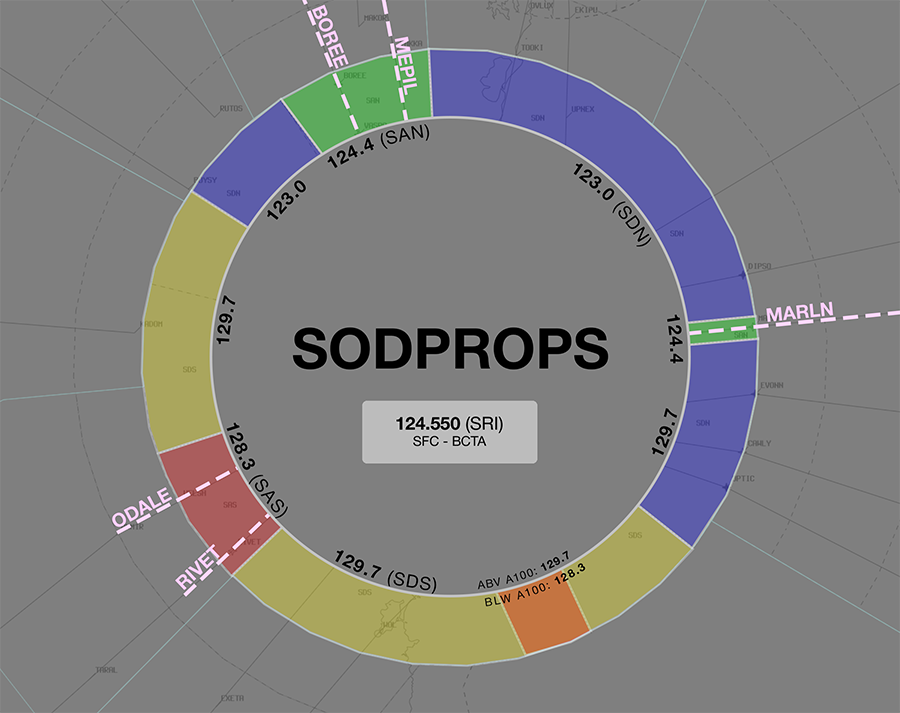
Aircraft being transferred from enroute to a TCU with multiple frequencies shall be given the frequency for the revelant TCU position.
| ADES | STAR | Frequency (Controller) |
|---|---|---|
| YSSY | BOREE | 124.400 (SAN) |
| YSSY | MARLN | 124.400 (SAN) |
| YSSY | MEPIL | 124.400 (SAN) |
| YSSY | AKMIR | 128.300 (SAS) |
| YSSY | RIVET | 128.300 (SAS) |
| YSCN | PRAWN | 124.400 (SAN) |
| YSBK | WHALE | 124.400 (SAN) |
| YSRI | RITSU | 135.900 (SRA) |
| YSRI | RUPEM | 118.400 (SWA) |
| YSWS | BIKUS | 124.400 (SAN) |
| YSWS | RIKNI | 124.400 (SAN) |
| YSWS | REVKI | 118.400 (SWA) |
| YSWS | UNTAV | 135.900 (SRA) |
Tip
The quick reference tables above only include scenarios for which there is voiceless coordination. Refer to the diagram for the appropriate position/frequency for coordination and handoff for all other situations.
Coordination
SY TCU
Airspace
SY TCU is responsible for the airspace within a 45nm radius of TESAT, SFC to F285.
Refer to Sydney TCU Airspace Division for information on airspace divisions when any child position of SAS is online.
Arrivals/Overfliers
Voiceless for all aircraft:
- With ADES YSSY:
- Assigned a STAR; and
- Tracking via BOREE, assigned
A100; or - Tracking via MEPIL, assigned
A090
- With ADES YSWS, or YSRI:
- Assigned a STAR; and
- Assigned
A090.
- With ADES YSBK, YSCN:
- Assigned a STAR; and
- Assigned
A080
All other aircraft coming from ARL CTA must be Heads-up Coordinated to SY TCU prior to 20nm from the boundary.
Departures
Voiceless for all aircraft:
- Assigned the lower of
F280or theRFL; and - that enter ARL airspace via any of the Green Shaded Corridors below.
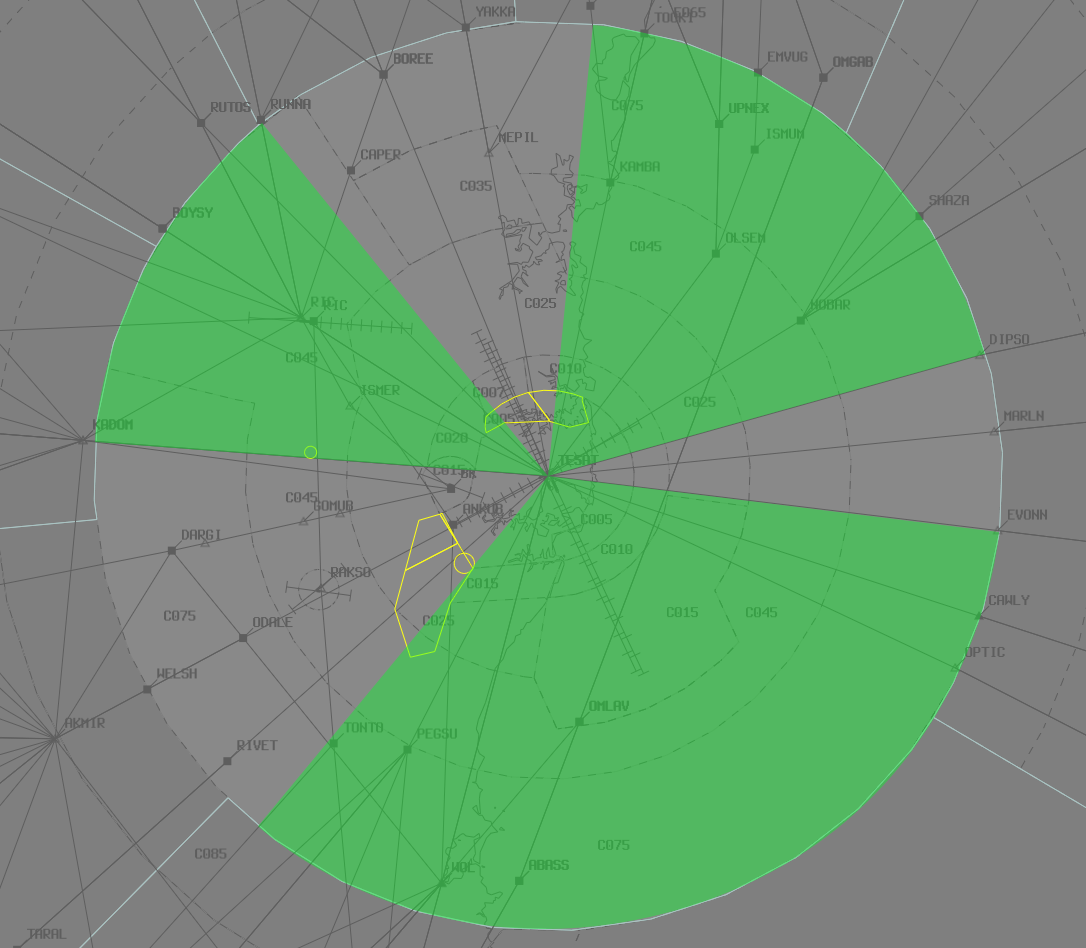
All other aircraft going to ARL CTA will be Heads-up Coordinated by SY TCU.
Enroute
As per Standard coordination procedures, Voiceless, no changes to route or CFL within 50nm to boundary.
ARL Internal
As per Standard coordination procedures, Voiceless, no changes to route or CFL within 50nm to boundary.
TW ADC
Airspace
TW ADC is responsible for the Class D airspace in the TW CTR SFC to A045, as well as the Class C airspace between A045 and A065.
Refer to Reclassifications for operations when TW ADC is offline.
Departures
Next coordination is required from TW ADC to ARL/GAH for all aircraft entering ARL/GAH CTA.
The standard assignable level from TW ADC to ARL/GAH is:
| Aircraft | Level |
|---|---|
| All | The lower of A070 and RFL |
Arrivals/Overfliers
YSTW arrivals and overfliers shall be heads-up coordinated to TW ADC from ARL/GAH prior to 5 mins from the boundary.
Phraseology
GAH -> TW ADC: "QLK6D, via MATLA DCT ST2WD"
TW ADC -> GAH: "QLK6D"
The standard assignable level from ARL/GAH to TW ADC is A080, any other level must be prior coordinated.