Amberley / Oakey TCU
Positions
| Name | ID | Callsign | Frequency | Login ID |
|---|---|---|---|---|
| Amberley Approach | AMA | Amberley Approach | 126.200 | AMB_APP |
| Oakey Approach | OKA | Oakey Approach | 125.400 | OK_APP |
Note
Amberley TCU is a military TCU and procedures can differ significantly to those in a civil TCU. Ensure you are familiar with the military controller skills necessary to provide a quality service.
Airspace
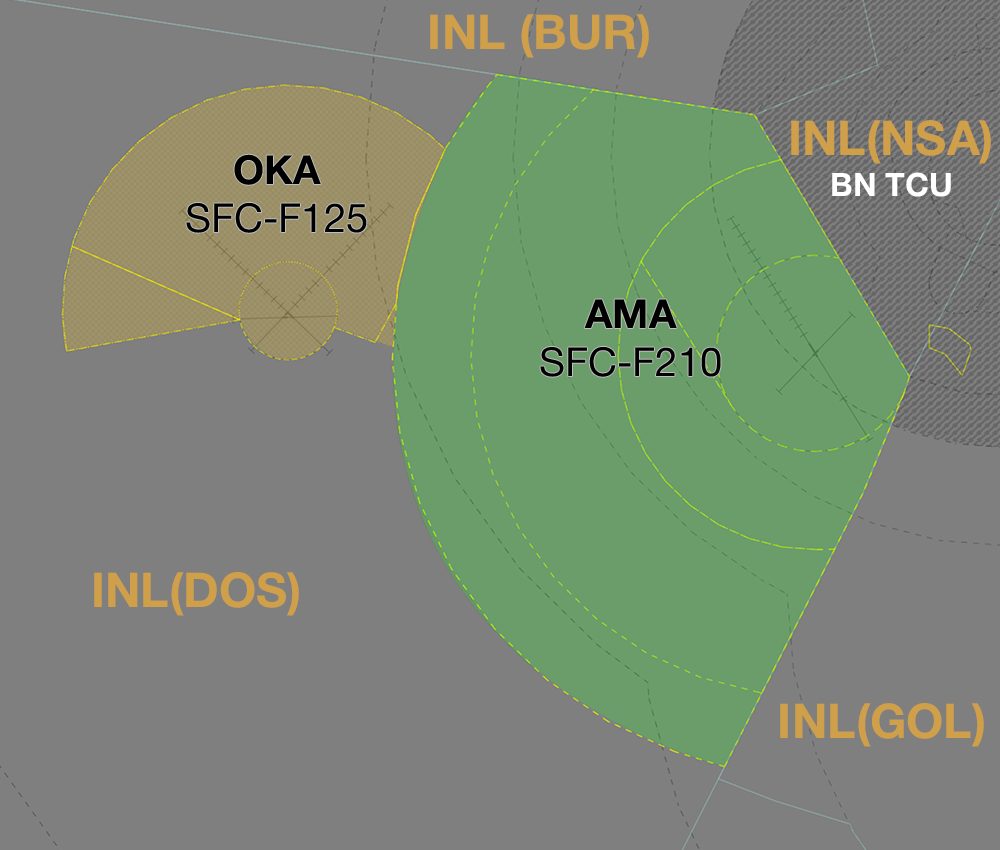
The vertical limits of the AMB TCU are SFC to F210. The vertical limits of the OK TCU are SFC to F125.
AMB ADC
AMB ADC owns the Class C airspace in the AMB CTR from SFC to A015.
OK ADC
OK ADC owns the Class C airspace within 5 DME of the OK VOR from SFC to A030.
Extending
AMA may extend to OKA and vice versa; callsigns remain the same. See Controller Skills for details.
Restricted Area Activations
When AMA is online, the following restricted areas are activated by default, and reclassified as Class C airspace.
- R625A (
A015-A085) - R625B (
A025-A085) - R625C (
A045-A085) - R625D (
A085-F210)
When OKA is online, the following restricted areas are activated by default, and reclassified as Class C airspace.
- R654A (
SFC-A065) - R654B (
SFC-A065) - R654C (
A065-F125) - R654D (
A065-F125)
SUA in Enroute Airspace
Military operations taking place in SUA in enroute airspace are outside the jurisdiction of AMB/OK TCU.
Upon receiving airways clearance coordination from ACD of an aircraft intending to operate in a currently inactive SUA in enroute airspace, AMB/OK TCU must give heads up coordination to relevant enroute controllers.
This gives the enroute controller sufficient time to assess the request, make necessary adjustments to any aircraft in the area currently, and activate the SUA; or alternately to refuse the activation request before the aircraft is in the air.
Phraseology
CRNG21 is requesting clearance to operate in the M640A-D restricted area.
AMB ACD -> AMA: "CRNG21 requests clearance to M640A-D”
AMA -> AMB ACD: "Standby, call you back."
AMA -> DOS: "On the groud YAMB, CRNG21, requests activation of M640A-D A050-F600, from 0300 until 0500. My onwards with SDY.”
DOS -> AMA: "CRNG21, your onwards with SDY."
AMA -> DOS: "CRNG21."
AMA -> SDY: "On the groud YAMB, CRNG21, requests activation of M640A-D A050-F600, from 0300 until 0500. My onwards with DOS.”
DOS -> AMA: "CRNG21, expect activation of M640A-D A050-F600, from 0300 until 0500. Your onwards with DOS."
AMA -> DOS: "CRNG21."
AMA -> AMB ACD: "CRNG21, clearance approved."
AMB ACD -> AMA: "Clearance approved, CRNG21"
Note
The requirement to coordinate activation of an SUA is in addition to existing coordination requirements. Heads-up coordination is still required for these aircraft if they do not meet the voiceless coordination criteria.
Local Procedures
Initial Pitch Procedures
The initial points at YAMB are aligned with Engine Test Cell 2 at the following locations.
| RWY | Initial Point | Altitude |
|---|---|---|
| 15 | 5NM downwind | A020 |
| 33 | 5NM downwind | A020 |
Military Gates
There are numerous military gates established throughout the AMB/OK TCU to facilitate entry and exit to adjoining SUA.
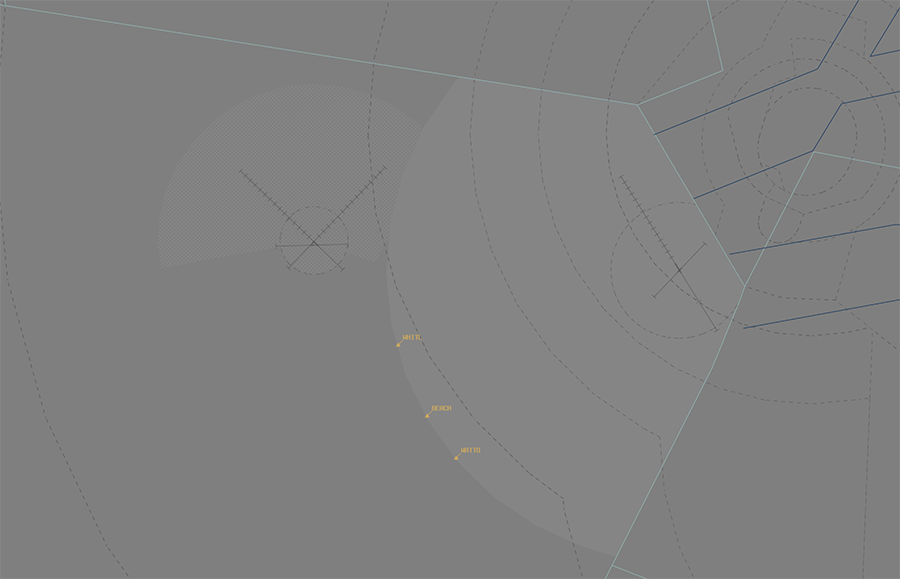
If the pilot does not nominate a gate, or nominates a gate that does not provide access to their intended SUA, AMB/OK ACD should clear the aircraft to depart via the appropriate gate.
| Intended SUA | TCU Exit Gate |
|---|---|
| M640A-D | Northern Corridor |
| M646 | Central Corridor |
| M649A-B | Central Corridor |
| M661A-B | Byron Corridor |
| R639A-D | BEACH |
Tip
Coordination requirements exist between ACD and TCU when aircraft are requesting clearance to operate in an SUA that has not been activated. Controllers performing the role of ACD should ensure they coordinate with TCU before providing clearance
Military Corridors
There are three military corridors established around the AMB TCU to facilitate transit of military aircraft between the TCU and adjoining SUAs.
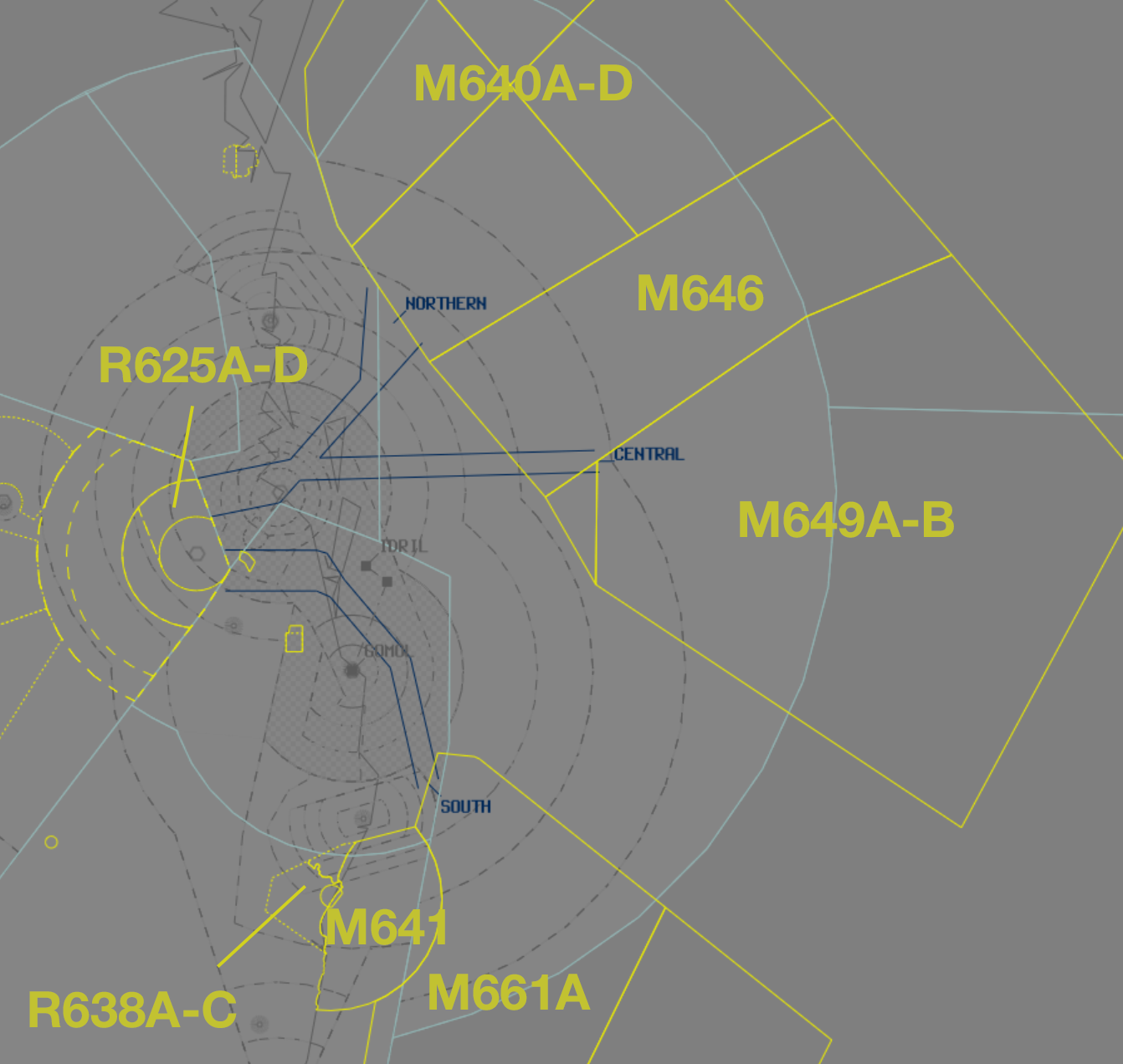
These corridors are located outside the jurisdiction of AMB TCU.
Northern Corridor
The Northern Corridor is used by aircraft to transit civilian enroute airspace between the AMB TCU and the M640A-D MOAs.
Aircraft departing to the areas will be cleared the NORTHERN 5 coded clearance by ACD, aircraft returning to the airport will be cleared the NORTHERN 6 coded clearance by INL(SDY).
Aircraft transiting the Northern corridor should be assigned the appropriate altitude to ensure separation with opposite direction traffic while transiting to their desired restricted area.
| Coded Clearance | Altitude |
|---|---|
| NORTHERN 5 | F190 at BINUP, F260 at MURJO |
| NORTHERN 6 | F270 at MOSSI/ADNUK, F200 at ANKED |
Note
Aircraft tracking via the NORTHERN coded clearance does not constitute a voiceless coordination route between AMB TCU and INL(NSA). Aircraft should still be heads-up coordinated prior to 5 minutes to the boundary, unless coordinated otherwise.
Central Corridor
The Central Corridor is used by aircraft to transit civilian enroute airspace between the AMB TCU and the M646 and M649A-B MOAs.
Aircraft departing to the areas will be cleared the CENTRAL 5 coded clearance by ACD, aircraft returning to the airport will be cleared the CENTRAL 6 coded clearance by INL(SDY).
Aircraft transiting the Central corridor should be assigned the appropriate altitude to ensure separation with opposite direction traffic while transiting to their desired restricted area.
| Coded Clearance | Altitude |
|---|---|
| CENTRAL 5 | F190 at BINUP, F260 at MURJO |
| CENTRAL 6 | F280 at VIRGE, F200 at ANKED |
Note
Aircraft tracking via the CENTRAL coded clearance does not constitute a voiceless coordination route between AMB TCU and INL(NSA). Aircraft should still be heads-up coordinated prior to 5 minutes to the boundary, unless coordinated otherwise.
Byron Corridor
The Byron Corridor is used by aircraft to transit civilian enroute airspace between the AMB TCU and the Evans Head SUAs.
Aircraft departing to the areas will be cleared the BYRON 1 coded clearance by ACD, aircraft returning to the airport will be cleared the BYRON 2 coded clearance by INL(SDY).
Aircraft transiting the Byron corridor should be assigned the appropriate altitude to ensure separation with opposite direction traffic while transiting to their desired restricted area.
| Coded Clearance | Altitude |
|---|---|
| BYRON 1 | F190 at COWIE, F260 at KIWEE |
| BYRON 2 | F270 at SEMAJ, F200 and TUGUN |
Note
Aircraft tracking via the BYRON coded clearance does not constitute a voiceless coordination route between AMB TCU and INL(GOL). Aircraft should still be heads-up coordinated prior to 5 minutes to the boundary, unless coordinated otherwise.
Training Areas
Civil Training Area
Civil operators (including Australian Air Force Cadets) conduct flying operations within the South Western Training Area (SWTA), located between the 10DME and 20DME arcs to the southwest of the AMB CTR. The SWTA is divided in half by the Rosewood-Mt Walker-Aratula Road into SWTA Alpha (north) and SWTA Bravo (south). The training area is classified Class G airspace but some pilots may request to climb into CTA to facilitate flight training (such as stall practice).
Tip
Consider restricting an aircraft operating in the CTA above the SWTA to either SWTA Alpha or Bravo where doing so would provide lateral segregation from other traffic operating in the AMB CTA.
Outbound Aircraft
Aircraft outbound from YAMB for the SWTA will exit the CTR at A025 via the following waypoints:
| Duty Runway | Routing |
|---|---|
| 15 | MTWK |
| 33 | CLVT |
| 04 or 22 | As required |
Inbound Aircraft
Inbound aircraft will contact AMB TCU when ready to return to YAMB. They shall be cleared via the following waypoints, at either A015 or A025 (as desired):
| Duty Runway | Routing |
|---|---|
| 15 | CLVT |
| 33 | MTWK |
| 04 or 22 | As required |
Transfer these aircraft to ADC approaching the boundary.
Phraseology
ASTR203: "Amberley Approach, ASTR203, 13nm southwest, A015, inbound, received Golf, request clearance"
AMA: "ASTR203, Amberley Aproach, cleared to YAMB via MTWK, maintain A015"
ASTR203: "Cleared to YAMB via MTWK, maintain A015, ASTR203"
AMA: "ASTR203, contact Amberley Tower, 118.3"
ASTR203: "118.3, ASTR203"
Oakey Flying Training Area
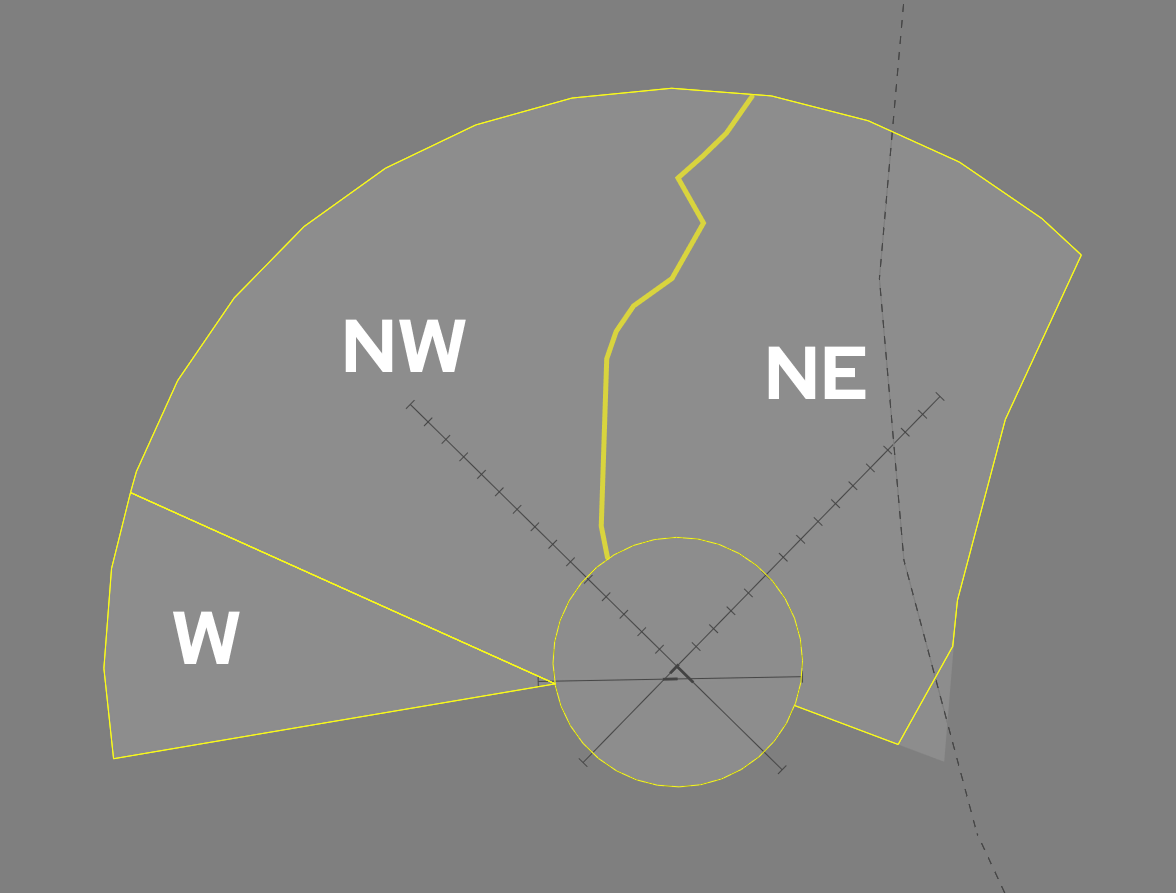
R654A, B, C and D are divided into the Western, North West and North East FTAs. These areas are the primary location for military helicopters conducting operations.
Ops Normal
Aircraft shall report established once within the FTAs, and nominate an Ops Normal time. If the pilot does not volunteer an Ops Normal time, ATC shall provide one.
Phraseology
FRTL31: "Oakey Approach, FRTL31, established western training area"
OKA: "FRTL31, call ops normal time 30"
FRTL31: "Ops normal time 30, FRTL31"
Transit
Aircraft may wish to transit from their existing FTA to another FTA. In this case, they shall be cleared to their requested FTA, via their existing FTA, not above A030.
Phraseology
CYCP90: "Oakey Approach, CYCP90, request northeast training area"
OKA: "CYCP90, recleared northeast training area, via northwest training area, not above A030"
CYCP90: "Recleared northeast training area, via northwest training area, not above A030, CYCP90"
Departure and Arrival Procedures
Departures
By default, aircraft will be cleared to transit to their requested FTAs by tracking direct. Aircraft outbound from YBOK for FTAs will depart the CIRA visually and track direct to their FTA.
Arrivals
Inbound aircraft will contact OK TCU when ready to return to YBOK. They shall be cleared to YBOK direct, not above A030, and be instructed to contact ADC at 5 miles.
Phraseology
KNGT43: "Oakey Approach, helicopter KNGT43, operations complete in northeast training area, request RTB YBOK"
OKA: "KNGT43, Oakey Approach, cleared to YBOK direct, not above A030, at 5 miles, contact Oakey Tower, 120.1"
KNGT43: "Cleared to YBOK direct, not above A030, at 5 miles, contact Oakey Tower, 120.1, KNGT43"
Coordination
Enroute
Departures
All aircraft from AMB/OK TCU to INL(All) require Heads-up coordination prior to the boundary, however, as soon as practical (when is the aircraft becomes airborne) is preferred.
Arrivals/Overfliers
All aircraft transiting from INL to AMB TCU and OK TCU must be Heads-up coordinated prior to 20nm from the boundary. Operations within AMB TCU are fairly ad-hoc, so there are no standard assignable levels. GOL/DOS/BUR and AMA/OKA controller must agree on a suitable level during coordination.
Phraseology
GOL -> AMA: "via HUUGO, PUMA11, will be assigned A090"
AMA -> GOL: "PUMA11, A090"
AMB/OK ADC
Departures
Next coordination is required from AMB ADC to AMB TCU for all aircraft.
The Standard Assignable Level from AMB ADC to AMB TCU is:
| Assigned Departure | Level |
|---|---|
| Coded Clearance | F190 |
| All others | The lower of F180 and RFL |
Next coordination is required from OK ADC to OK TCU for all aircraft.
The standard assignable level from OK ADC to OK TCU is:
| Aircraft | Level |
|---|---|
| Fixed-wing | The lower of F120 and RFL |
| Rotary-wing | The lower of A030 and RFL |
ACD to TCU
The controller assuming responsibility of ACD shall give heads-up coordination to AMA/OKA (or the enroute controller responsible for the AMB/OK TCU) prior to the issue of a clearance to an aircraft intending to operate in an SUA that has not been activated.
Phraseology
AMB ACD -> AMA: "CRNG21 requests clearance to M640A-D.”
AMA -> AMB ACD: "CRNG21, clearance approved."
Most military operations will take place in SUA adjoining the TCU in enroute airspace. AMB/OK TCU must coordinate the activation of these SUAs with the relevant enroute controllers prior to approving any clearances.
BN TCU
All aircraft transiting from BN TCU to AMB TCU and vice versa must be Heads-up coordinated prior to the boundary.
Phraseology
AMA -> BDN: "via BN, DRGN02"
BDN -> AMA: "DRGN02, F140"
For aircraft arriving into AMB TCU there is no standard assignable level.
Phraseology
BDN -> AMA: "via WACKO, STAL13, what level can I assign?"
AMA -> BDN: "STAL13, A100"
BDN -> AMA: "A100, STAL13"
AMB/OK Internal
All aircraft transiting between the AMB/OK TCU boundary must be heads-up coordinated.
Phraseology
OKA -> AMA: "via AGIVA, ANGL32"
AMA -> OKA: "ANGL32, A025"
Charts
Reference
In addition to the civilian ERSA and AIP publications, the RAAF AIP website contains the necessary charts (available in the TERMA) and description of procedures (in each airports' FIHA).