Overview
Summary of Changes
Multiple significant changes were introduced in Australian airspace on 09 July 2026 (AIRAC 2607).
Control services were introduced at two airports: Ballina Airport (YBNA) and the newly constructed Sydney/Nancy-Bird Walton (YSWS), significantly affecting operations in two of Australia's busiest TMAs.
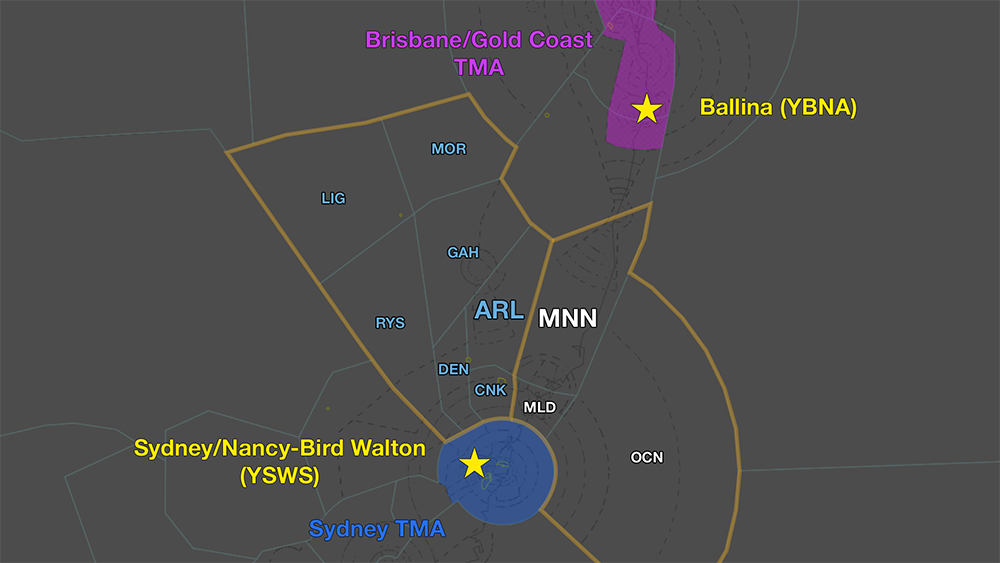
On this page you will find a summary of the changes and the SOPs that have been introduced to support the new aerodromes, including aerodromes, terminal areas, and enroute sectors.
Reference
You can find charts for all the new SIDs, STARs, and airspace volumes on the Airservices Australia AIP.
Questions?
A Q&A channel has been created on the VATPAC Discord, open to all members of the community. If you have any questions relating to these major changes, join the conversation!
Ballina Airport (YBNA)
Ballina Airport is a certified aerodrome on the northern New South Wales coast, near Byron Bay.
In the real world, Ballina Airport is a very busy aerodrome. It is used daily by regular commercial jet and turboprop passenger traffic, general aviation traffic, sight-seeing helicopters, and flying schools. It is one of very few airports in Australia to operate a local SFIS.
On 09 July 2026 YBNA became a controlled Class D airport.
Aerodrome
A new BA CTR has been established around YBNA, SFC-A015. This airspace is the responsibility of a new ADC controller, BA ADC.
The airspace in the BA CTR will be classified as Class D.
Please see the Ballina (YBNA) SOPs for full details about aerodrome operations.
TCU
Previously uncontrolled airspace surrounding YBNA has been reclassified:
- Class D airspace extends up to 20NM DME from YBNA, with lower level steps starting from
A015 - The lower level of Class C airspace up to 75NM DME YBCG has been lowered, as low as
A045overhead YBNA.
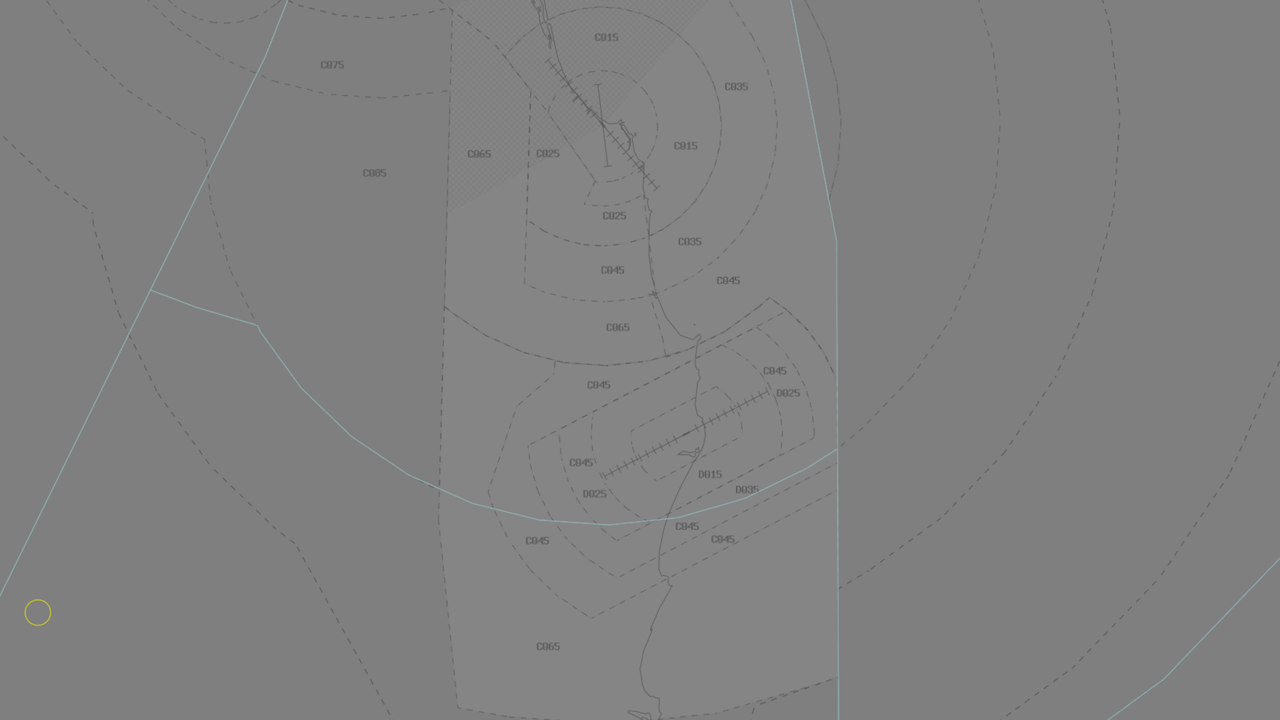
The Brisbane/Gold Coast TCU has been extended to cover the newly reclassified airspace. A new TCU controller, BAA ('Ballina Approach'), has been introduced as a child position of BAC, and has primary responsibility for the area.
Please see the Brisbane TCU SOPs for full details about TCU operations.
Enroute
INL has new responsibilities relating to YBNA, including STAR assignment and sequencing.
Please see the Inverell SOPs for full details about INL operations.
Sydney/Nancy-Bird Walton Airport (YSWS)
Sydney/Nancy-Bird Walton Airport is a newly constructed airport in Sydney's west, following a multi-billion dollar project designed to alleviate congestion at Sydney/Kingsford Smith (YSSY).
The airport is intended to operate without curfew restrictions and will be progressively expanded over the next fifty years as the aviation industry expands.
On 09 July 2026 YSWS became a controlled Class C airport.
Tip
Most people will be more familiar with the name Western Sydney Airport, or the IATA code WSI. To reduce ambiguity in radio communications, the airport is exclusively referred to as Nancy-Bird Walton Airport (or Walton for short) in all phraseology.
Phraseology
ML ACD: "YMA123, cleared to Nancy-Bird Walton via DOSEL, flight planned route."
Aerodrome
A new WS CTR has been established around YSWS, SFC-A015. The airport is controlled by three new aerodrome positions: WS ADC, WS SMC, and WS ACD. The airspace in the WS CTR is classified as Class C.
YSWS operates 24 hours a day. When WS ADC is offline, SY TCU must provide a top-down service to the aerodrome.
Please see the Walton (YSWS) SOPs for full details about aerodrome operations.
Other Aerodrome Updates
Sydney (YSSY) Changes
Operations at Sydney (YSSY) have been adjusted to accommodate the new airport and associated aircraft movements.
- The SIDs have been significantly adjusted, particularly the procedures for aircraft departing to the west. Some SIDs have been replaced entirely (such as the RIC or WOL SIDs), and a new non-jet SID has been introduced.
- The Standard Assignable Departure Headings and Departure Frequencies have changed.
- The R405 restricted area (over Sydney Harbour & the Parramatta River) has been retired, replaced with R407. R407 has similar, but not identical, boundaries.
Tip
To reduce ambiguity in radio communications, the airport will be exclusively referred to as Kingsford Smith Airport in all phraseology.
Phraseology
ML ACD: "QFA454, cleared to Kingsford Smith via DOSEL, flight planned route."
Please see the Sydney (YSSY) SOPs for full details about aerodrome operations.
Bankstown Airport (YSBK) Changes
Bankstown (YSBK) is located between YSWS and YSSY, and the new controlled airspace in the area has led to profound changes to operations at the airport.
- The Bankstown CTR has grown in size, and now adjoins newly introduced Class D airspace beneath the Class C steps in the SY TMA. This airspace is controlled by SBA ('Bankstown Approach'), a SY TCU position.
- All VFR movements should now be conducted via newly introduced coded clearances. These coded clearances give specific routes for aircraft to follow as they transit SBA airspace.
- A new set of SIDs have been introduced to facilitate IFR departures.
Please see the Bankstown (YSBK) SOPs for full details about aerodrome operations.
Camden Airport (YSCN) Changes
Camden (YSCN) is located close to the southern boundary of the WS CTR.
- MYF and BRY are no longer inbound VFR waypoints for YSCN.
- During the hours of 23:00 and 06:00 Sydney local time, the volume of Class C airspace overhead YSCN is lowered from
A045toA015, precluding normal operations. For this reason, controllers are prohibited from logging on as either CN ADC or CN SMC during this time.
Please see the Camden (YSCN) SOPs for full details about aerodrome operations.
Richmond Airport (YSRI) Changes
Richmond (YSRI) is located north of the WS CTR and has experienced changes to its procedures.
- The restricted areas over Richmond have been renumbered.
- A new set of SIDs have been introduced, replacing all previous procedures.
- RI ADC's airspace has changed to match its real world boundaries.
Please see the Richmond (YSRI) SOPs for full details about aerodrome operations.
Sydney TCU Changes
The Sydney TCU has expanded west to cover newly reclassified airspace associated with YSWS.
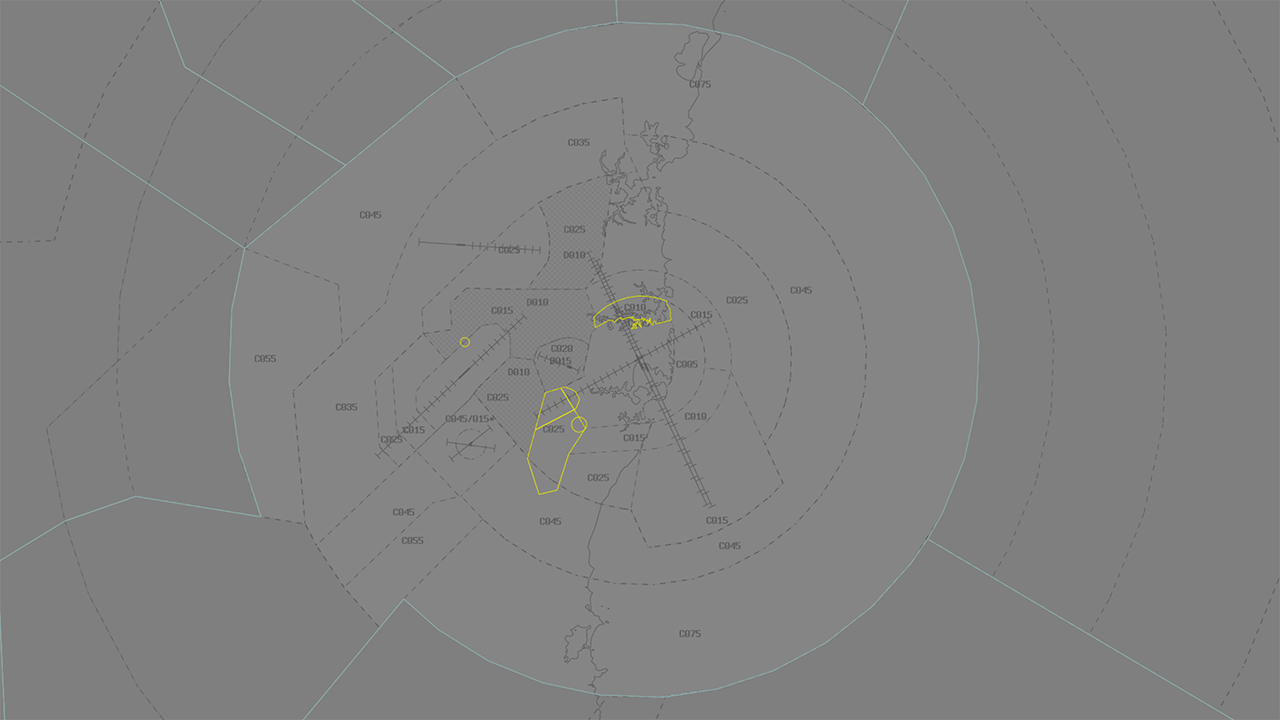
- A new TCU controller, SWA ('Walton Approach'), has been introduced as a child position of SAS, and has primary responsibility for the area.
- Another new TCU controller, SRA ('Richmond Approach'), has been introduced as a child position of SAS, with jurisdiction over the SY TCU airspace above YSRI.
- Yet another new TCU controller, SBA ('Bankstown Approach'), has been introduced as a child position of SAS, with jurisdiction over two lower level volumes of airspace used by aircraft arriving and departing YSBK.
- There are now SIDs and/or STARs for all controlled aerodromes within the Sydney Basin, with a complex network of altitude restrictions. While there is procedural separation between most SIDs/STARs, there are multiple potential sources of conflict that need to be closely monitored.
Please see the Sydney TCU SOPs for full details about TCU operations.
Important
To ensure all controllers are aware of the changes, all existing Sydney TCU Endorsements are being temporarily invalidated, with controllers required to undergo a small amount of training to revalidate their endorsement. Any controller with a Sydney Complex Terminal Airspace Endorsement from before 09 July must complete the Sydney TCU Differences Package before controlling a Sydney TCU position.
Enroute
The boundaries of several enroute positions have changed, as is the YBBB/YMMM FIR boundary.
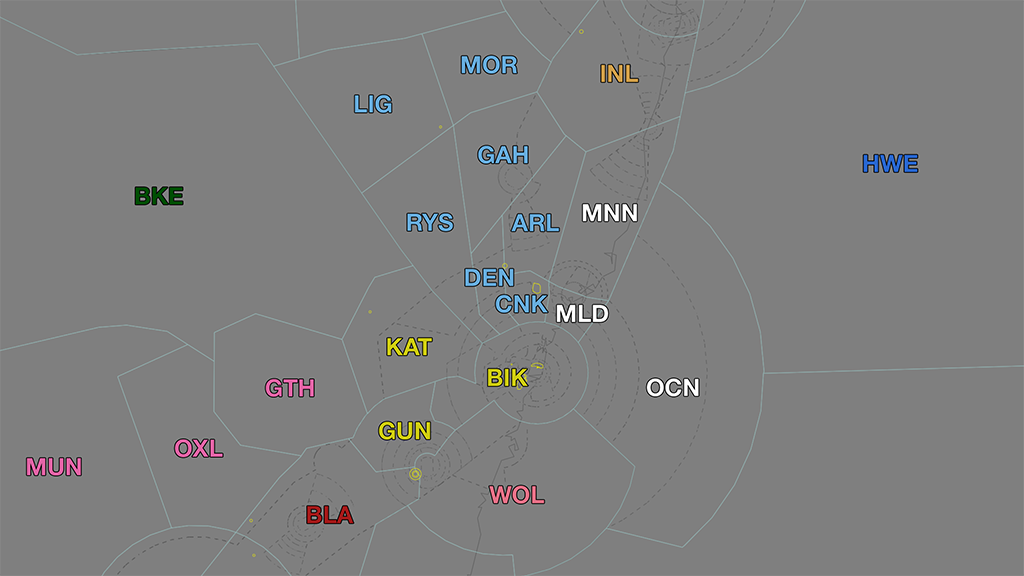
Two new enroute primary positions are being created with jurisdiction over the airspace that was previously grouped under ARL.
Armidale (ARL)
The updated ARL has six child sectors: CNK, DEN, LIG, GAH, MOR, and RYS.
This area roughly aligned with the previous MDE, CNK, and ARL subsectors, but also includes airspace that was previously managed by KAT. The main responsibilities of this sector is to process and sequence arrivals to YSSY and YSWS, with additional responsibilities relating to YSTW and YBBN-YPAD traffic.
Several YSSY STARS from the west have changed, notably the replacement of the ODALE STAR with a new AKMIR STAR, which alters the standard reroute given to aircraft when traffic levels are high.
Please see the Armidale SOPs for full details about ARL operations.
Manning (MNN)
MNN has two child sectors: MLD and OCN.
These three positions were previously children of the ARL parent position, but were split off to better manage the workload north of Sydney.
The main responsibilities of this sector is to process departures out of the SY TCU, with additional responsibilities relating to YWLM traffic.
Please see the Manning SOPs for full details about MNN operations.
Gundagai (GUN)
The boundaries of GUN have changed.
- KAT expanded to include airspace that was previously part of BIK. The subsector has additional responsibilities to process and sequence YSWS arrivals.
- BIK adjusted size to accommodate an expansion in KAT airspace close to the SY TCU boundary. BIK retains responsibility for the airspace above the SY TCU.
- GUN shrunk slightly as the BIK subsector extended westward. GUN has additional responsibilities for processing arrivals to YSWS.
Please see the Gundagai SOPs for full details about GUN operations.
Wollongong (WOL)
The boundaries of WOL very slightly adjusted at the western edge near YSCB. The sector now has increased responsibilities for managing southbound departures from YSWS.